To terrorize or not to terrorize


Two Tuesdays ago, I attended the NY premiere of the opera "Grendel." Elliot Goldenthal was the composer, and his partner Julie Taymor (seemingly most well-known for Broadway's musical "The Lion King" and for directing Titus and Frida and for her acclaimed production of Die Zauberflöte at the Met last year...my review of that here) was director, co-librettist, and puppet designer. George Tsypin, who collaborated with Taymor on Die Zauberflöte, reunited with her as set designer.


This was an adaptation of the novel by John Gardner that retells the story of Beowulf from the monster Grendel's perspective. I've not read the novel, but if the Goldenthal-Taymor adaptation was faithful, then both transform Grendel from a mindless beast into a Hamlet-esque brooder, an introverted philosopher wearied by the weight of his own thoughts. As with the revisionist musical Wicked, the opera traces his monstrous soul to mistreatment at the hands of cruel children in his youth because of his physical appearance.


I enjoy opera, but most are a bit long for me. It would be a lie to say I've survived all three hours of any German opera without my eyes and ears and mind wandering around the theater more than a few times. "Grendel," an English (of the new and Old variety) opera, is no exception, but a few things helped to focus my attention. Taymor/Tsypin always provide a dazzling palette for the eyes, and by the oohs and aahs of the opening night crowd, that might be enough in and of itself to earn a checkmark. Tsypin's main contribution is a gigantic, rotating wall with a pivoting cutout in the center that swings back and forth like a drawbridge. Taymor's puppets include those with her trademark geometric grandeur, including a massive dragon head. Constance Hoffman's costumes supply a pleasing contrast to the puppets, some of the other monsters in Grendel's cave looking like some first grader's terrifying crayon scrawls come to life.


I enjoy me some Taymor puppets dancing around Tsypin sets as much as the next guy, but the music is what stays with you. Goldenthal is most known to me for his film score work, and "Grendel" reminded me at moments of a Stravinsky-influenced film score. Much of the vocal line given to Grendel (hard-working bass Eric Owens, looking from my cheap seats like a man in a slate-colored body cast) reverberated past me, literally and figuratively, and I had to read the notes to the opera to catch all the nuances of the story.


At times, the opera includes a bit of welcome post-modern humor. I recall one scene, or perhaps it was the first act, ending with Grendel shouting, "Bullshit!" His first line upon appearing on stage: "And so begins the twelfth year of my idiotic war."


At the opera's conclusion, the crowd gave an enthusiastic ovation, and the snippets of conversation I heard in the mass exodus all concerned Taymor's puppets, Hoffman's costumes, and Tsypin's monolithic wall.


"Just beautiful, wasn't it?"


"Oh, it was just so gorgeous. Just wonderful to look at."


I won't go so far as to refer to "Grendel" as "The Lion King" for adults or with loftier aspirations, but sometimes I think you could set Taymor puppets on a Tsypin set to music from a CD and people would turn out eagerly, so visually starved are opera fans.


One benefit of attending opera (and theater) is that it's one of the few remaining social outings that makes me feel young, the average age of the audience at the Met skewing into another generation. One of the countless reasons I'm so depressed to be leaving NYC is that the Met's upcoming season includes more than one show I'd love to see: Anthony Minghella's interpretation of "Madame Butterfly," Tan Dun's "The First Emperor" starring Placido Domingo (with help on the libretto from novelist Ha Jin and some production assistance from Zhang Yimou), and Franco Zeffirelli's production of "La Boheme."


Swiiiiiiing, golfa


Ken sent me a link to this Nike swing portrait for Tiger Woods. They shot this with the Phantom v5 military-grade digital camera, capable of capturing up to 4000 frames per second. By "they" I mean Academy Award winner and frequent Steve Spielberg collaborator Janusz Kaminski, one of my favorite cinematographers.


Ken was in awe of how still Tiger holds his head. At the center of his vicious vortex of a swing, his head is the eye of the hurricane, completely at peace. I love how wide and perfect his swing arc is. The arc traced by the head of Tiger's driver is the modern version of the Vitruvian Man. From the camera in front, you can see the tee jump up in the air and twirl like helicopter blades captured in slow motion.


He's competitive as hell, but more than that, his swing is fundamentally sound.


Floyd Lazarus


“I don't expect to win this Tour anymore. It's never easy to get back eight minutes but I'll keep fighting till the end and try.”


That was Floyd Landis, after yesterday's stage 16.


OLN's ratings for the Tour de France are down a lot this year, which is not surprising with Lance Armstrong's retirement. Fans of cycling who stuck with the sport and followed today's stage, though, witnessed one of the most incredible efforts in Tour history. I didn't arrive home from LA until 3am last night, and my Pacific-time-zoned body stayed up until 6am watching yesterday's stage off of my DVR. Then, my alarm woke me at 8am, and despite feeling like Landis looked on that final climb yesterday, I dragged myself out of bed just to see if anything interesting had happened in the stage.


I flipped on the TV, and within seconds I knew I wouldn't be sleeping again this day. Floyd was away already, on a desperate, near suicidal attempt to rescue his yellow jersey dreams. This is one time I wished I was in France (well, actually, that's lots of times) because OLN's coverage started too late to capture Floyd's attack as it came so early in the stage.


A day earlier, Floyd bonked on the final climb and lost a staggering 8 minutes plus and fell from first all the way to eleventh. Just about everyone wrote him off, me included. Only two stages remained for Landis to regain time: today's final mountain stage in the Alps, and Saturday's final time trial. Friday and Sunday's stages are flat, too difficult for a podium contender to get away from his competition. So today Landis had no choice but to attack. Everyone knew he had to attack, and everyone knew his team was not strong enough to support him. He'd have to do it on his own, and to make up serious time, he'd have to attack early.


Every other team knew it, and despite all that, when Floyd attacked on the very first climb in pursuit of an 11-man breakaway, none of his contenders could follow. He left all of them panting in the wake of a devastating acceleration.


He caught the 11-man breakaway, then sliced them up like a Santoku knife through chicken breast. Up and down over five climbs, Landis never let up. Many had noted that even after Landis gained the yellow jersey, he hadn't put his mark on this Tour, hadn't attacked. Without a strong team, he'd ridden conservatively, simply marking his key opponents.


The French press will have to find something else to complain about now. Landis's ride today was the type of bold, courageous, solo effort that recalled the greatest cyclist ever, Eddy Merckx. I had goosebumps for nearly the entire broadcast.


Now, Landis has to be the favorite again, especially as the strongest time trialist among the contenders. He sits third, 30 seconds behind race leader Pereiro, with Sastre sandwiched in between in second. I expect Landis to ride himself inside-out in Saturday's time trial, just in time to don the yellow jersey for the final ride into Paris.


Just awesome. Catch the replay of today's stage on OLN tonight. Hopefully they'll have more footage from Landis's initial attack.


Don't call it a comeback!


Sizzle, snap, crack


For Floyd Landis, today his Tour victory journey comes to an end. Cue Daniel Powter's "Bad Day."


Today was one of the two monster stages of the Tour de France, including two climbs I've ridden in the past, the Col du Galibier and the Col de la Croix de Fer. Both are HC (hors categorie) climbs, so difficult they are beyond categorization. And those were just climbs to set the stage for the two finishing climbs, the Col du Mollard and La Toussuire. In the punishing furnace of the French summer, Tour cyclists had to ride through a couple of circles of Hell today.


Floyd Landis found his limits today on that final climb. In cycling parlance, he cracked. First Dennis Menchov attacked, and Landis could not follow. Though T-Mobile paced Klöden and Landis back, the blood was in the water. Carlos Sastre attacked, and down went Landis. By the end of the stage, won by that albino praying mantis Michael Rasmussen, Landis had dropped to 11th overall, 8:08 behind Oscar Pereiro. In just over 13km, or the final 8 miles and change, Landis's Tour hopes evaporated as quickly as water off the pavement.


He's still probably the strongest time trialist of the podium contenders, and from day to day, one's legs can feel remarkably different, so Landis can still reach the podium. But he can't sit back and mark his opponents anymore. He has to attack.


The day I climbed the Col du Galibier, I also climbed the Col du Telegraphe first. They are companion climbs. I was riding with another guy on the bike tour, and up and over the Telegraphe, I felt decent despite near 100 degree temperatures and a stifling humidity. I had enough energy to stand up to accelerate through the switchbacks. But on the short descent down the other side, I did not have much time to recover. Before I could catch my breath, the road leaned back into me again on the way up the towering Col du Galibier. About halfway up, my speed dropped down to about 14 km/hr, and no matter how hard I tried, I could not push past that ceiling. I had redlined. My buddy waited for a bit, and then I waved him on. The rest of the climb was a long, lonely delirium of suffering. I spent much of that ride trying to detach my mind from my body so that I could displace my pain, compartmentalize it. I tried to think of my body as merely a machine to which I issued commands.


But despite many hours spent toiling up the Alps and Pyrenees of France, I've missed it these past few summers. Whenever July rolls around, I long to be on my bike, fighting gravity to ride uphill. There have been few times in my life I've felt more alive.


RELATED: An article in the NYTimes about how to run marathons in high heat and humidity.


Screwing around with faces and heads


Every time I arrive in L.A., I think two things. First, as I exit the airport, I think, "Oh the weather here is unbeatable."


Then, as I pick up my rental car and merge directly into a never-ending queue of traffic, "Oh, *%&$@#!."


Two random reader contributions. From John, MyHeritage is facial recognition technology for photographs. Their conversation starter for now is a feature that matches uploaded faces to the celebrities they most resemble. As you can imagine, I rated as a high probability match for a composite of George Clooney and Brad Pitt, but then you didn't need such advanced technology to anticipate such a result.


From Mike:


The Amazing Screw-On Head, a humor comic from Mike Mignola (who

created Hellboy), is being made into an animated series on the Sci-Fi

channel. They have the pilot episode on their website:


http://www.scifi.com/amazingscrewonhead/


It's about this robot-type guy whose head can screw on to bodies. He

works for Abe Lincoln taking care of weird supernatural problems. It's

voiced by Paul Giamatti and the main bad guy is voiced by David Hyde

Pierce, so the acting is good.


Lovecraftian humor and steampunk adventure? I'm there.


Spooks Season 4


In what is now an annual ritual, I will sing the praises of the BBC television drama Spooks (aired in the U.S. as MI-5 on A&E) and note that season 4 will release on DVD in the UK on Sept 4. With the dollar as weak as it is versus the pound, I would usually recommend waiting for the show to air in the U.S., but Season 4 shows no signs of appearing on A&E anytime soon, and the show is just that good. So if you have a region-free DVD player, and you should, then pre-order this (or you can, of course, prowl the internets for a torrent).


MI5 is the UK's anti-terrorist security service, and the show dramatizes the campaigns among a core group at the agency. It's addictive adrenaline-pumping, and in my TiVo queue, it's in the top spot even if it shows no signs of re-appearing on this side of the Atlantic anytime soon. I can think of few other shows so willing to put its main characters in (SPOILER ALERT: don't click on the next link unless you've seen all the episodes, b/c the roster of deceased characters is a huge spoiler) bodybags on such a consistent basis, but that's part of what makes it so good. The show doesn't adhere to the usual rules.


Season 4 is brilliant, as always, and the season finale, in a proud tradition, is mind-blowing. As you'd expect from a British production, the acting is first-rate, filled with a roster of handsome faces. Peter Firth, in particular, is unforgettable as MI5 director Harry Pearce. One just feels safer when one's spies have a British accent, from Alec Guinness's George Smiley to the various incarnations of 007 (Scottish accents, too, if we include Connery, and we do, wholeheartedly). They sound smarter, and the accent confers a certain swagger and ruthlessness that is dangerously soothing in our intelligence personnel.


I'm a sucker for spy thrillers, and it's surprising that American television only has 24, which is good but has more of a pop sheen. Another show that I enjoy that has a similar feel to Spooks, though adapted to a Japanese futuristic sci-fi world, is Ghost in the Shell - Stand Alone Complex. It airs on the Cartoon Network and the two seasons are available on DVD in the U.S. Don't expect the production values or intense action sequences of the movie from which the TV show derives. The TV show has even more of a cerebral feel, but it's entertaining in its own right.


Random unrelated factoids from Sean Connery's IMDb Trivia:


"Said in an interview that during the filming of Never Say Never Again (1983), he was taking martial arts lessons and in the process angered the instructor who in turn broke his wrist. Connery stayed with the wrist broken for a number of years thinking it was only a minor pain... the instructor was Steven Seagal."


"Turned down the role of Gandalf in The Lord of the Rings series (The Lord of the Rings: The Fellowship of the Ring (2001), The Lord of the Rings: The Two Towers (2002), and The Lord of the Rings: The Return of the King (2003)) because he didn't want to film down in New Zealand for 18 months, and could not understand the novels."


"Turned down the role of the Architect in The Matrix Reloaded (2003) and The Matrix Revolutions (2003)."


Opening shots


Jim Emerson is compiling a list of the most famous opening shots in movies. You can read some reader and Emerson nominations on his blog. If you're a movie buff, you can try your hand at Emerson's opening shot quizzes one and two (the answers are here and here, respectively). The second quiz is much much easier than the first and is a good test of your classic movie familiarity quotient.


I look forward to the companion piece, Parting Shots. Famous pening and closing shots are like opening and closing lines in books. Good ones condense the essence of the entire work into very little.


Last year I saw Antonioni's The Passenger at the New York Film Festival, just prior to its re-release on DVD. It contains what would be one of the top 5 spots on my list of best parting shots. In one, long, unbroken shot of some seven minutes, Antonioni reprises the entire movie. The shot is mysterious from a literal perspective: what happens, and how did they shoot it?


But it is also symbolically elegant. As the camera escapes through the "prison" bars of the room, we revisit reporter David Locke's (Jack Nicholson) escape into another man's identity, that of a dead gun-runner. But as the camera glides towards freedom, it is pulled back around and re-enters the hotel, bringing us back into the room. Some things you just can't escape, and one can read that final shot in numerous ways. It is pregnant with meaning.


The new DVD release contains a 126 minute version of the film, longer than the 118 minute version on an earlier MGM cut. Antonioni has described an even longer cut of two hours and a half that he prefers, but that may never see the light of day.


Game theory and penalty kicks


Fresh off a World Cup Final decided by penalty kicks, here are a couple economic articles on game theory and penalty kicks. Because of the setup for penalty kicks, the goalkeeper has to guess which way the striker will kick the ball. Tim Harford writes about the application of Morgenstern and von Neumann's game theory to this problem and cites a study by an economist at Brown that found that individual strikers and keepers were acting according to game theory:


Ignacio Palacios-Huerta, an economist at Brown University, found that individual strikers and keepers were, in fact, master strategists. Out of 42 top players that Palacios-Huerta studied, only three departed from game theory recommendations. Professionals such as the Brazilian Rivaldo and Italy’s goalkeeper Gianluigi Buffon are apparently superb economists: their strategies are absolutely unpredictable and, as the theory demands, they are equally successful no matter what they do, indicating that they have found the perfect balance between the different options.


At a book signing about a month ago, Steven Levitt cited similar research that he'd just completed. He and some colleagues published a paper (PDF) studying predictions of game theory using data on penalty kicks in football and discovered that football players were acting close to the theoretical ideal. The one exception, they found, was that players were not kicking it up the middle as often as they should, perhaps because of the embarrassment that might result from a failed kick if the keeper doesn't dive to one side or the other.


What he's been riding


Online before it hits physical print in the Sunday NYTimes Magazine this weekend: "What He's Been Pedaling," a profile of Floyd Landis and his effort to overcome a debilitating hip condition to win the Tour de France. Landis has avascular necrosis, the same condition that felled Bo Jackson, and a few weeks after the Tour de France he'll be having his hip replaced.


The article's written by Daniel Coyle, who wrote Lance Armstrong's War, which I thoroughly enjoyed and highly recommend. From the article:


The Tour de France’s status as the world’s most physiologically demanding event is largely unquestioned. The riders cover 2,272 miles at an average speed of 25 miles per hour, roughly the equivalent of running a marathon almost every day for almost three weeks. In the Pyrenees and the Alps, they climb a vertical distance equal to three Mount Everests. They take in up to 10,000 calories per day, the equivalent of 17 Big Macs, elevating their metabolic rates to a level that, according to a Dutch study, is exceeded by only four species on earth. All of which transforms Landis into the embodiment of an intriguing question: Is it possible for someone with a ruined hip to win the Tour de France?


It's interesting that Landis and his team have chosen to reveal this condition in the middle of the Tour. He doesn't seem to be the type to need a built-in excuse for failure, and no one in the Tour will take pity on him. Perhaps he just tried to break the news before it emerged in the NYTimes? But he was the one who revealed the info to the interviewer, so it's not as if this dropped out of the sky.


After Landis has hip replacement, he may be able to ride at the same level, but he may not. There's no precedent to refer to, and so I'm rooting for him to get on the podium this year. It might be his last chance, though I hope it's not.


Here, Floyd Landis demonstrates his time trial position, which he calls the Praying Mantis.

Having just returned from a week in Beijing, I'm also familiar with this position, which I like

to call "Sending a text message to a friend on a Blackberry while perched over a public squat

toilet in a narrow stall: 'Please bring toilet paper to stall number 3 right now! Godspeed.'"


Patently Silly


Patently Silly is a hilarious weblog devoted to exposing some of the more ridiculous patents issued by the US Patent and Trademark Office. Okay, I can maybe understand issuing a patent for the cordless jump rope (maybe), but the American Flag Bandage? This Sun Mask Towel?


Yes, this ingenious contraption is the Sun Mask Towel. I invented this

for Halloween in the second grade, actually, though I should have

secured the patent at that time. You may laugh, but try using a regular

towel as a sun mask, and you'll understand the utility of the cutouts

for your eyes, nose, and mouth.


Sure to restore your faith in American innovation, the nutcracker pictured below is the most stylish use of a female leg since the lamp in A Christmas Story. Surely the product of a male inventor?


Or, in the vein of expository titles like Snakes on a Plane, there is this patent: Amusement Device That Senses Odorous Gases in a Bathroom:


A novelty device that makes humorous statements when a person is having a bowel movement in a confined bathroom. Within the device is a gas sensor for detecting at least one gas emitted during a bowel movement. The device also includes a speaker for transmitting an audible message. When gases from a bowel movement are detected, audible statements are transmitted and synchronized movements are effected in the automated character.


The configuration of a canary in a birdcage was selected because canaries were often used by miners to detect the presence of gas in coal mines. Once activated, a humorous audible message is broadcast. The massage may say "What a stench! Somebody open the window! There are rules against cruelty to animals!" A countless number of messages can be used. The canary may drop over dead.

Chuck Klosterman on SOAP


Chuck Klosterman writes in Esquire about the potential downside to Snakes on a Plane. I don't think it's as tragic as he makes it out to be. Hollywood already cranks out cookie cutter movies all the time, chasing after past successes as if buying last week's winning lottery number will improve one's chance of winning the next lottery. If Snakes on a Plane is a commercial success, we'll probably get an awful sequel or two regardless of whether or not the first was any good, but that's no different than plenty of other film franchises. Hell, we're about to get another Rocky movie in which an aging Sylvester Stallone goes up against Antonio Tarver. Snakes on a Plane is just business as usual, albeit with a new trigger, that being the plain yet descriptive title.


Or perhaps it's more than the title. The novelty of that wore off for me a while ago. I think the magic ingredient here is the promised presence of the foul-mouthed, indignant Samuel L. Jackson persona. If, in SOAP, he suddenly screams, "Yes, they deserve to die and I HOPE THEY BURN IN HELL!" then you'll see entire theaters erupt in applause.


It must be fantastic being able to entertain people by ranting and raving and cussing like a sailor. I wish I had that power. Then, when a waiter angered me, I could just scream at them and yet bring them some small measure of joy to them at the same time.


The header from the footer


The Daily Mail hires a lipreader to decipher what Materazzi said to Zidane to provoke the header heard round the world. It turns out Materazzi called Zidane the equivalent of n***** and then said "we all know you are the son of a terrorist whore." And then, "So just f*** off." Given Zidane's Algerian background and quick temper, the headbutt is not at all shocking. I'm none too fond of Materazzi; he's a well-known punk. Still, I think if you're Zidane, you hold off on retaliation until after the game. Then, at the exchange of handshakes, you pull Materazzi's jersey over his head and then pound his face into the turf. It's not like this is the first time someone has used truly offensive trash talk to take another team's best player out of the game. If they miked more players in sporting events, people would be shocked at the type of things you hear on the playing field. [from Kottke]


In New York Magazine this week, a quick and dirty guide to happiness, with lots drawn from Daniel Gilbert's Stumbling on Happiness, which I've just about finished. Among the tips of interest:


  • Those who seize the first option that meets their standards (which don’t have to be low, just defined) are happier than those who insist on finding the perfect solution.

  • Don’t go to law school. Lawyers are 3.6 times more likely to be depressed than members of other professions.

  • Send the kids off to day care, summer camp, and boarding school. On a day-to-day basis, caring for children creates roughly the same level of satisfaction as washing the dishes.

  • Take the local, and don’t wait for the express. Inaction gnaws away at the mind relentlessly.

  • Order from the same takeout menu every time (as long as you're not ordering takeout every night of the week). Variety is the spice of life only for heavily repeated experiences.

  • Take advantage of your exercise machine’s “cooldown period,” because adding a slightly less grueling epilogue to a grueling but valuable experience—like a workout—makes you more willing to repeat it in the future.


Bubblesnaps, a quick and dirty way to add speech or thought bubbles to your pics.


For Mac users, a way to play Quicktime videos in full screen without paying for Quicktime Pro.


An interesting dialogue at Slate between Jason Furman and Barbara Ehrenreich on the merits of Wal-Mart for the American working class. Decision goes to Furman, I think, though it's a bit of a mismatch as Ehrenreich acknowledges.


Ninja lessons [from Thrillist]


From Skype, for its US and Canadian users, 3 weekends of free SkypeOut calls to the UK, Mexico, and Japan.


Some nifty covers for download.


A more secure shoelace knot. I use another method that may be equivalent. I don't make two loops to tie my shoelaces. I make one loop and then tie the second lace around it once before pulling the second lace through to form the second loop. If I just swing the second lace around my thumb twice instead of once before pulling the second lace through, the knot never seems to come undone.


Parallels for Desktop for Mac is $49.99 through July 15, then its price goes up to $79.99. ArsTechnica gave it a positive review.


42, of course


Stephen Hawking asks Yahoo Answers: How can the human race survive the next hundred years? Sounds more interesting than it actually was. That's not really the type of question you toss out to the Internet. Maybe he just wanted a good laugh. For his next question, he should post some absurdly difficult quantum physics problem.


According to this Microsoft Labs adCenter predictive tech, my website should appeal primarily to <18 year olds, with the next largest demographic being 18-24 year olds. Having seen these results, you can expect increased coverage of Ashlee Simpson, Lindsey Lohan, and NSync here.


Useful guidelines for placement of punctuation vis-a-vis inverted commas, one of those grammar issues that always bedevils me.

UPDATE: Jenny was quite distraught that I'd consult the Brits for grammar. We Americans have our own rules for these situations.


I'm watching the World Cup final right now, but during halftime, I watched some Zidane videos on YouTube to maintain the mood. Smooth.

UPDATE: Hmm, I wonder if Zidane's OT headbutt will make it into any of these videos. Oh, those hot-tempered Frenchmen. Live by Zidane, die by Zidane.


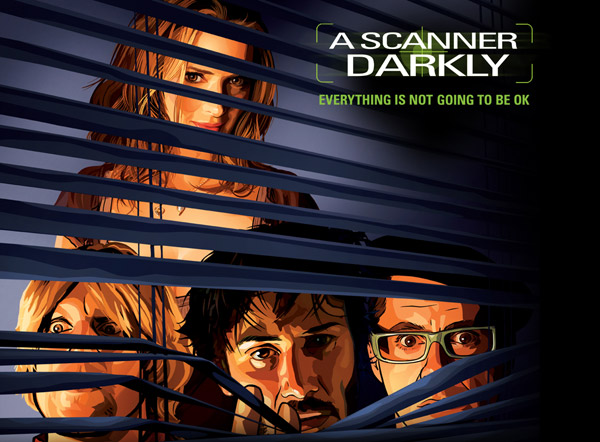
A Scanner Darkly


[SPOILER ALERT: Contains a spoiler or two, especially if you have not read the book, though the movie isn't really plot-twist-driven. It's not as if I'm going to reveal that Rosebud was a sled or that he's a ghost or anything of that magnitude.]


Wednesday night, I attended a preview screening of A Scanner Darkly at the Lincoln Center. After the movie, Robert Downey Jr. and Richard Linklater were to host a discussion about the movie.


Lingering jetlag zonked me out in the afternoon, and by the time I awoke from a long, long nap and rushed up to Lincoln Center on the subway, I was late for the event. Fortunately, these things never start on time, and I found a decent seat on the aisle. Ethan Hawks was directly ahead of me, two rows up. While catching my breath, I felt someone hovering over me in the aisle. I looked up and it was Keanu Reeves, chatting with someone who knew Rory Cochrane, one of the other actors in the movie.


I've heard Keanu speak a handful of times in person now, and he is an enigma with that awed surfer voice wrapping itself around such a wide range of ideas. I caught snippets, "So he can read Proust and Goethe in the original languages? That's fantastic." Seems like a nice guy.


Linklater was caught on an airplane so he missed the introduction which Robert Downey Jr. and Reeves provided instead. Downey Jr. is a huge talent, with boundless supplies of charisma, and the two of them warmed up the crowd with some improvised comic banter.


I have read some Philip K. Dick, but not A Scanner Darkly, so I can't comment on the faithfulness of the adaptation, but some of the guests addressed the issue in Q&A.


Notes from the Q&A, with guests Richard Linklater, Robert Downey Jr., Keanu Reeves, Jonathan Lethem, and PKD's daughter Isa:


  • The first PKD novel Linklater ever read was Valis.

  • After Waking Life and post 9/11, Linklater was searching for another use for the rotoscoping, and this PKD novel just felt timely.

  • Though they used the same software as for Waking Life, they were able to generate more detail this time. Linklater noted that what they did was not pure rotoscoping; he refers to their process as interpolated rotoscoping.

  • They use style sheets to maintain some consistency. As Linklater put it, style sheets told the animators, "This is how you draw Keanu's beard. This is how you draw Winona's..." [when he paused here, the crowd laughed, because Winona is topless, albeit in animated form, in some of the movie] "...jaw."

  • Keanu was the one person on the set who had his nose in the book the whole time (Downey Jr. did not read the novel).

  • Linklater wrote and rewrote as they went along, always trying to maintain the spirit of the book. Someone, I think it was Lethem, mentioned that when PKD first saw Blade Runner, he said that the movie was okay, but he wished that someone would make a movie that honored the ideas in his books. Lethem felt that A Scanner Darkly is the most faithful PKD adaptation ever, the only movie that honors the ambiguity and indeterminacy of PKD's work.

  • Jonathan Lethem, a PKD expert, was consulted upon before production to help the cast and crew to understand PKD's vision.

  • A Scanner Darkly is the most autobiographical of PKD's novels, a cautionary tale. PKD was addicted to amphetamines and saw many loved ones submit to drug addictions of one form or another. "If it wasn't for drugs, our dad would still be writing," said Isa. She found the end dedications to be the most moving part of the film because she knew the people referenced.

  • With an $8 million budget, Linklater had to get Isa and the rest of PKD's family to agree to a lower option fee.

  • Linklater screened the movie for Radiohead, and they liked it, so they allowed some of their music to be used in the soundtrack, including a single from Thom Yorke's new solo album The Eraser to run over the end credits.

  • Downey Jr., jokingly, I think, on Linklater, "He's a monster. I know you're thinking he's such a nice guy, softspoken, sitting here, but he works you like a rib. 'You want lunch?! This is for PKD! His daughter is sitting right there!'"

  • The biggest change they made in the movie versus the book is a twist in which Winona Ryder emerges from the second scramble suit, worn by Fred's superior on the force. It was an added twist, but one Linklater and others felt was still faithful to the spirit of the novel.

  • Where did the title A Scanner Darkly come from? Isa thought it was from Biblical scripture, while Linklater thought it might refer back to the Bergman film (I assume he meant Through a Glass Darkly.

  • The look of the movie was intended to be that of a graphic novel.

  • Linklater never thought to do a live action version of the movie. "Someone could pull that off," said Linklater, "but I couldn't."

  • Lethem liked the use of animation because "animation gives a more seamless division between reality and hallucination." Prose can do that better than most any medium. Photography is too literal. Animation helps moving pictures to capture language's potential for metaphor.

  • A lot of famous faces were used as models for images on the scramble suits, including PKD. Something to play around with once the DVD comes out.

  • The advantage of rotoscoping was that they could stick things in the scene that could just be ignored during animation, like microphones. It allowed Linklater and crew to focus on the scene as a whole while ignoring random details about getting the shot perfect, things which often consume so much time on set.

  • The shoot itself, a 25 day shoot, went smoothly. Once they shifted to animation, they hit some snags. It took longer than expected to finish.


This is about as far from a popcorn movie as you'll find in theaters this summer, a departure since most PKD novels have been transformed into sci-fi action flicks. The movie is challenging in a way that other PKD film adaptations have not been. In making the central character an addict whose personality has been splintered by drug use, and in nesting one conspiracy inside another in a Russian doll of dark forces (government, pharma, the police, among others), Linklater and company have left the movie bereft of any easy emotional handle for the audience, no one character to identify with. The dialogue-to-action ratio might frustrate the average filmgoer. On the other hand, this movie stands as a testament to the idea that Hollywood can turn out animation for adults, animation about ideas.


If you've ever sat around listening to the seemingly meaningless babble of a group of stoned buddies, you have a sense of what it feels like to listen to watch much of this movie. It's occasionally hilarious, especially the verbal parrying between Downey Jr. and Woody Harrelson, but often maddening and obtuse. The rotoscoping is effective at heightening the sense of reality's dissolution. Every moment on screen looks the same, whether it's a hallucination, a flashback, video on a surveillance screen, or reality. You can't tell one from the other. On the other hand, I occasionally wished I could see Downey Jr.'s character in live action. His face operates on a frequency that rotoscoping can't capture.


So finally, a most faithful PKD adaptation to the silver screen. PKD fans will rejoice, but the studio, I'm guessing, may not when box office receipts come in. I, for one, am glad we don't have another PKD story pillaged for an action dud like Paycheck.


A gambler's sale


Delicious Monster is holding a Gambler's Sale on its popular app Delicious Library. Every week the price goes down $5 until they've sold a secret number of copies, or until 4 weeks have elapsed. You can buy now or wait for the price to go down and risk that the sale will end before you get your purchase in. It's a bit like a clearance sale in which a retail store keeps reducing the price on items until they get rid of everything in inventory. If you wait, there's a chance that snazzy shirt you want will go down in price even more, but there's also a chance some other shopper, one who's not quite as cheap as you are, will walk off with it.