Wordloaf


Among the many cool-sounding shows I haven't had time to see recently is "All About Walken," a show featuring a bunch of Christopher Walken impersonators.


The Adobe Photoshop CS3 beta releases this Friday. Rumor has it that the Universal Binary will "scream" on the new Intel-based Macs.


Monthly upload bandwidth lifted from 20MB to 100MB for free accounts at Flickr. I though they should have lifted those a while ago, but better late than never.


I was fuming mad at the world today, well, mostly Bank of America for their shoddy (read: nonexistent) integration between branches in different states, and then I went back to watch episode 6 from this season's Simpsons, and by the end of the episode I was smiling again. Go grab a torrent. With guest appearances by Gore Vidal, Tom Wolfe, Michael Chabon and Jonathan Franzen, and another comic turn by J.K. Simmons reprising his J. Jonah Jameson from the Spiderman movies, it's an instant classic. And yes, I don't watch much TV anymore which is why I'm recommending an episode that aired sometime during the Kennedy administration.


Technorati Tags: , , , , , , ,


RIP RA


Last week (or was it the week before?), on my way into school, I was listening to NPR when I heard that Robert Altman had passed away. We'd just watched a print of his Nashville the week before for class, and his passing saddened me much more than most celebrity deaths. He seemed like such an avuncular soul, and perhaps his death resonates so much because he was a director sui generis. Who else could have made Nashville? And who would've thought that Emilio Estevez, of all people, would try to channel Altman and Nashville?


Can you spot all 75 bands represented in this photo?


What policy issues do most economists agree on?


I saw Mabou Mines DollHouse tonight, a truly unconventional adaptation of Ibsen's A Doll's House, source of the most famous door slam in literary history. In this Lee Breuer version, all the male characters are played by little people, none taller than four and a half feet. The women, on the other hand, are played by very tall women. I don't see much avant-garde theater, but I recognize it when I see it. The only Ibsen play I've read is Hedda Gabler, but I'm going to go out on a limb and guess that Krogstadt doesn't get a blow job from Kristine in Ibsen's original text. And I can't imagine another production of this play that could elicit more laughter. Not all of Breuer's choices spoke to me, but it's been a while since I've seen a production with as many ideas that got me thinking long after I'd left the theater.


Yep, there's no shortage of Obama 2008 paraphernalia at Cafe Press.


Technorati Tags: , , , , , , , , , ,


Sundry


At Broad Nightlight is a small collection of nighttime photos of Berlin, Tokyo, and Hong Kong. What's peculiar about these is how few people are visible.


The upcoming issue of Wholphin will contain Alexander Payne's film school thesis, The Passion of Martin.


10 innovative ad campaigns in Tokyo train stations.


The Amazon plog for the book How Lance Does It contains some interesting points. In one post, author Brad Kearns quotes Dr. Glen Gaesser on how to identify the most talented athletes. Said Glaesser, "Go to a race and stand at the finish line. Then...see who crosses the line first. There is the most talented athlete." Kearns also writes a passionate post defending Lance Armstrong: Why Lance is Clean. But my favorite quote is about Lance's successful approach, and it's on the back cover. "Lance hates losing, but is not afraid of it." That sums up a lot of all-time greats in many sports (remember the Jordan Nike ad "Failure").


A man sold everything he owned, took the cash, and bet it all on one spin of roulette in Las Vegas. This is what happened.


It doesn't appear that this chair is available for purchase yet, but already I want one.


An interview with Eiko Tanaka of Studio4°C, the company in charge of adapting Taiyo Matsumoto's classic manga Tekkon Kinkreet into an animated feature.


Technorati Tags: , , , , , , , , , , , , , , , , , , , ,


Black Monday


Dry Shampoo. Spray in, wait two minutes, and brush out. What will they think of next? Useful on a film set, or if your livelihood depends on looking good all the time (comme moi), or if you're confined to a bed because some Kathy Bates-like character has gone Misery on you. Or if you are this guy.


The Dragon is the most revered sign of the Chinese zodiac, so Chinese birth rates in Dragon years escalate, leading to crunches in providing schooling, medical services, etc. Some economists conducted a study which debunks this superstition, but I still look for a healthy increase in sales of lingerie, champagne, and roses in China in mid-2011, leading into the next Dragon year in 2012.


In a game that had clearly become a draw, Vladimir Kramnik made a stunning mistake late in his second game versus the computer program Deep Fritz to allow the software to checkmate on the next move.


James Surowiecki on Nintendo and how it has found profitability with products like the Wii while Sony and Microsoft rack up huge losses in their efforst to win the console war. There are many markets that are not "winner takes all." We're #3! We're #3!


In this week's New Yorker, George Saunders can't resist offering his two cents on Borat, and I read it, and it is probably the most trenchant critique of the movie yet. Borat is, as M refers to Bond in the the latest offering, a "blunt instrument." The irony of it all is that Cohen's burgeoning fame is undermining his ability to find gullible targets, forcing him to pick on easier and easier targets (lawsuits notwithstanding) and transforming him from David to Goliath. I laughed at many moments of the movie but was disappointed at all the material recycled straight from the TV show.


Technorati Tags: , , , , , , , , , , , , , ,


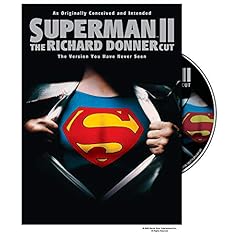
Superman II, the Richard Donner Cut


Superman II - The Richard Donner Cut


Richard Donner was canned during the shoot of Superman II, and Warner Bros handed the reigns over to Richard Lester. I'm usually annoyed when studios release another version of a movie on DVD much later after releasing the original. It's usually a ploy to extract more dollars from real fans (e.g., King Kong--Three-Disc Deluxe Extended Edition), but this is different. I didn't think this cut would ever see the light of day, and if nothing, it will be interesting to watch purely as a lesson in the power of editing.


Technorati Tags: , ,


Chips


Beta test some new Kettle Brand Potato Chips flavors.


Cinematical has compiled the YouTube links to every Bond opening credit sequence ever.


Louis Menand on the new Thomas Pynchon novel Against the Day:


[It] is a very imperfect book. Imperfect not in the sense of “Ambitious but flawed.” Imperfect in the sense of “What was he thinking?”

Online only, in this week's New Yorker, five different Thanksgiving-themed covers by Chris Ware.


Technorati Tags: , , , , , ,


We're on


The first three of my group's shoots were two weekends ago. We rotated through crew positions for each other, and I started out as the sound mixer. Consciously or not, I channeled the demeanor of other sound mixers I've seen on set before and spent most of my time with my headphones on, trying to stay out of the way of the gaffers and grips running around.


On the next shoot, I was the AD, a position which reminds me of program management in the technology world. As an AD, you spend most of your time running around keeping people on task, running a series of mental calculations to ensure the director gets all the shots needed in the time available. Most people don't like the AD, but there's an art to it. I enjoy the job in small doses, but it's not a position I aspire to. Since our first shoots are given a time and film constraint--from call time to wrap, we have four hours and four hundred feet of 16mm film--the AD has to be particularly tuned into where the shoot is in terms of film and time. Four hours has seldom felt shorter.


At the same time, all those years working at Amazon.com accustomed me to maintaining a certain zen-like focus in a maelstrom of stress and emotion. It's like trying to launch a website on time by facing down a series of bugs. Movies do not occur naturally; they require an infusion of directed human energy.


The third shoot came the same day as the second shoot and started in the evening. We were all running a bit on fumes by that point, but counteracting my exhaustion was a burst of adrenaline because I was DP'ing the shoot. If it's nerve-wracking the first time an AD calls the shoot and every one on set looks to you as the director for some answer, it's just as if not more intimidating to have the visuals of your classmate's directorial effort in your hands.


Up until each moment I turned on the camera, everything around me was a chaos of human activity. Lights going up, equipment and props swirling all around the sound stage, people shouting light meter readings, actors or boom operators asking questions. And then, when I flipped the Arriflex camera on, the gorgeous sound of the film being pulled through the gate would fill the air like a flock of birds taking flight, and all else would go quiet.


That chatter of film being pulled through a mechanical motion picture camera surely must be one of the most magical sounds in all of art, one of the beautiful pieces of analog feedback that's lost when shooting on video.


On my DP shoot, I had a taste of everything. The first shot was on a tripod. The second started on a high hat, but when that didn't work, I squeezed up against a wall and shot it handheld. Then I had a shot down from up on a catwalk, a PA holding onto me so that I wouldn't fall over and drop to the stage below.


The final shot, though, was a real doozy, or the coup de grace depending on how you looked at it. My classmate wanted a crane shot to descend from overhead onto a couple lying in bed, with the camera tilting and panning so that it ended up in a side profile shot from just off the side of the bed.


We didn't have a crane for this shot, so to simulate that we had to pop the bed upright and secure it to a wall. Then we staples the sheets and pillows to the bed and shifted all the wall dressing--photos, posters, a cross--to a false ceiling. Then the couple would stand up and act as if they were lying down, and to simulate the crane shot we'd dolly in at an angle and pan the camera as we moved in. It reminded me of what Michel Gondry did for much of his video for Massive Attack's "Protection."


We had about twenty minutes left when we finished the previous shot. I did not think there was any way we'd get the shot off, so I suggested just shooting a wide shot and then pushing in for a MS or CU so that she could just cut them together in the final edit. I didn't want her to have to live without any footage of her opening scene. But she believed we could get the dolly shot. She wanted us to go for it. Inside, I was glad. I wanted to try to get it.


The tech office had given us a special tripod head to mount the camera on horizontally, at a 90 degree angle. But try as we might, we couldn't get the tripod head to tighten on the camera. With ten minutes left, I suggested just shooting the shot handheld. But the director still had faith. We'll get it, she insisted. People were running around the set like villagers fleeing a horde of pillaging invaders, trying to set up lights and secure everything to the set.


With three minutes left, there was no time to fix the tripod head. I said I'd lay the camera on my shoulder. We threw the camera and tripod on the doorway dolly, and I jumped up beside it. We would not have time to rehearse. The gaffer shouted a couple quick light readings to me. I did some simple math in my head. The lighting was suitable for our T-stop. There was no room on the dolly for my AC, so I estimated the focus by eye and nodded to the director. This would be an all-or-nothing effort.


Everyone went silent, and then the director shouted "Action!" My dolly grip began pushing in, and I began panning with my right hand as we neared the bed, while with my left hand I pulled my own focus, trying to estimate how far to pull just by looking through the viewfinder. When we got all the way into the bed, I was twisted up like a pretzel, trying to maintain my balance and hold the camera still while the actors kissed and chatted on the bed.


"Cut!"


My director looked at me. Did we have time for one more take? The TA gave us the go-ahead, so we rushed the dolly back to one. And again, without slating, we rolled. My dolly grip pushed in, and I panned and pulled focus and tried to keep the camera steady on my shoulder. It was utterly insane, and completely exhilarating.


And then our time was up, our film was done, and we had no idea if we'd captured anything. I spent two and a half days feeling a bit cold inside, wondering if we'd gotten it. Had I pulled focus properly? Was the pan smooth? Did the shot really look as if it had come down from overhead?


A few days later, we gathered to watch the dailies from the first weekend's shoots. I was bouncing in my seat the whole time, waiting for the footage to come up on screen.


When the shoot I DP'd came up on screen, I felt a knot in my stomach as the grey card appeared. I'd never seen film I'd shot projected before. It was stomach turning both in a good and bad way. One thing I miss from the days of shooting film is that gap in time between taking a photo and getting the slides or contact sheet back from the lab. It's maddening, but if you feel like you got off a beauty, it's like waiting a few days to unwrap a Christmas present. During that time, it sits there all wrapped and pretty and full of possibility, and your imagination runs wild until you forget exactly what you shot so that when you finally see the finished product, it's a surprise again.


The other good thing about shooting film is that it forces you to think when you're framing. An entire generation is being raised on digital photography, using the camera and cheap memory cards to just snap one picture after another until the right one shows up on the LCD screen in back. That's fine, but it transforms photography into a brutish trial-and-error art, and it doesn't work well if you're trying to capture a fleeting moment.


That crazy dolly/pan/tilt shot? We got it. By some miracle, we managed to get the shot the director wanted. If you hadn't known what we'd done, it would appear as if we'd shot the scene from overhead. I felt sixteen levels of relief and two of joy when it appeared they'd be usable.


Next time it won't be quite so tense. But you can't ever match the rush of the first time.


Technorati Tags: , , ,


Q&A


Thanksgiving stuffing--in the bird or out? Mark Bittman recommends out, in which case it's dressing, not stuffing.


Do you really need a 1080p TV, or will 1080i suffice? You're probably okay with just 1080i, marketing literature notwithstanding.


Does Daisuke Matsuzaka throw the gyroball or not? Will Carroll published a new article (you have to be a subscriber to read it, unfortunately) on Baseball Prospectus today stating that he does believe now that Matsuzaka throw the gyroball, but that he doesn't yet have control over which type he throws. There appear to be two variations that differ based on the tilt of the axis of rotation. If it points up, the ball moves more laterally away from a right-handed batter (all this assumes a right-handed pitcher). If it tilts down, the pitch actually breaks in on a right-handed batter. Carroll pointed to this video of Matsuzaka as having the closest rendition of a pure gyroball:


You know what I enjoy about watching Japanese pitchers? They tend to have long, deliberate motions with high leg kicks, long windups, with hands and feet tracing wide arcs around their bodies (many also have these odd pauses or hitches that mess up the batter's timing). It's old school. Not many pitchers have such motions anymore (as a Cubs fan, Mark Prior and Kerry Wood's super simple deliveries come to mind, in contrast to a guy like Kevin Appier). I love watching old videos of guys like Luis Tiant or Sandy Koufax, with their huge leg kicks. Every pitch looked like a complex series of coordinated motions requiring maximum exertion to pull off correctly.


Technorati Tags: , , , , , , , , , , ,


Soderbergh goes old school


David Bordwell has an edifying post on Steven Soderbergh's attempt to pay homage to a more classical style of shooting in The Good German. Bordwell's post builds on a Dave Kehr article in the NYTimes about the same topic.


Some of Soderbergh's lens creative restrictions--black and white only, no zoom lenses, and no sound that couldn't be captured by a boom mike--amused me because that's what I basically lived with for my first student project which I shot with my crew two Sunday's ago. I shot on Kodak's 16m Double-X black and white film stock, used prime lenses wherever possible (except for two OTS shots because I didn't have a prime lens in the range I wanted), and captured all sound through the boom.


Kehr's discussion of coverage versus cutting in one's head in the article seemed like a happy coincidence because we're being taught how to shoot coverage in one of our classes right now.


"Don't cut in your head!" we're told again and again. On our first projects, it was unavoidable. I had only 400 feet of 16mm film and needed to shoot a three-minute two-person dialogue scene. I just didn't have enough film to shoot the whole scene all the way through from each camera angle. So I had to make some decisions in my head about what portions of the script to shoot from each angle.


When I was in NYC editing, I could understand the appeal of shooting coverage. Having options as to how to cut a scene was liberating. As directors mature, though, I suspect they shoot less and less coverage because they know what they want out of a scene and can work more quickly by cutting to the chase. Over the years, for example, Scorsese realized that he could jump into a scene without a master or establishing shot, and so he did. A lot of times, you don't need that master shot. The modern audience member is very quick to process what they're seeing.


Soderbergh is also often his own editor, and directors like Scorsese are knowledgeable on the art of editing, so they may be exceptions.


Technorati Tags: , , ,


Hmm


Economics can be applied to all sorts of decisions, e.g. the costs and benefits of a bikini wax.


You've heard of the turducken, but how about the turduckencorpheail? The osturduckencorpheail? Or the bustergophechideckneaealckideverwingailusharkolanine?, a 17 bird nested bird roast served at a royal feast in France in the 19th century? Sounds disgusting? I'm not sure the nested vegetarian concoction, the tofucken, has any more appetizing an appellation. Apparently the rule on nested birds is that their name must be nested to create a monstrosity similar in nature to the dish itself. [thx to Joannie]


The trailer for the Simpsons movie.


Technorati Tags: , , , , , , , , ,


Spiderman 3 trailer in HD


Spiderman 3 trailer in High Def or in low def below.

It seems as if they're continuing with the idea of giving his powers a psychosomatic origin. When he didn't want to be Spiderman, as in the second movie, his powers waned. In this one, it seems as if they're using the black Venom Spidey suit as a visual reflection of Peter's moral corruption as he seeks revenge for his uncle's death.

Of course, in the first movie, it's used as a sort of joke. He has the hots for MJ, then he's bitten by a spider, then he starts shooting milky white webs around his room without any control. Gee, I wonder if that's a metaphor for something.


Technorati Tags: , , , ,


This is all I have to offer


Aaron Sorkin visits a dental hygienist.


Why don't studios just use catchy movie posters as the DVD cover? Looking at the examples cited, I suspect that studios think that by the time the DVD comes out, everyone knows the story, so they don't go with the more mysterious poster images which act almost like teasers. But I agree, the movie posters are superior. Those are some fugly DVD covers, most of which seem to say, "Hey, remember who was in this movie?"


Amazon.com posted a copy of the Publisher's Weekly advance review of Thomas Pynchon's new novel Against the Day. PW gave Pynchon a star, their mark of recommendation. If my mind weren't monopolized by all the first quarter film shoots my classmates and I are buried under, I'd be game for tackling new Pynchon. But my mind is, and so I'm not. Not even close.


Technorati Tags: , , , , , ,


A little bit of that


James Surowiecki writes about how the powerful illusion of housing as a guaranteed investment winner persists. Some of the economic errors he points out in rising housing price statistics are so basic that you'd think they'd have been corrected long ago. Two examples are not adjusting housing prices for inflation and failing to account for housing improvements. Sample bias is another problem: data on housing prices comes only from houses sold and don't reflect houses that don't sell because the owners aren't happy with the market price.


A collection of links to blog posts apologizing for not having posted in a while. Funny. People probably overdo it on the blog absence apologies. People can probably figure it out: you're too busy, too lazy, or on vacation.


Soundtrack.net has song by song previews from the new Casino Royale score. Some tracks evoke early John Barry, and many of those early Bond cues from Barry evoke my childhood like no other movie themes. My dad loved James Bond movies, and I used to hate it when ABC or another network would air a Bond movie late on a weekday night because I'd always have to go to bed early for school and miss the ending. I don't know why so many people are down on the new Bond movie before it has even hit the big screen. It's arguably the most successful and durable film franchise in Hollywood history, and the mythology is still alluring: play with the most advanced gadgets, travel to the world's most exotic locations, save the world from the craziest of megalomaniacs, and bed the world's most beautiful women. It's just a twist on the superhero movie genre, one that surmises that if such a super spy existed he probably wouldn't be the shrinking violet that is Clark Kent or Peter Parker but rather a somewhat sadistic, cocky SOB who'd want to indulge in all the perks of the office. If the perks weren't there, who'd take the job?


David Lynch's daily LA weather reports return. I listened to it this morning and felt unusually happy about the good weather having heard about it from Lynch.


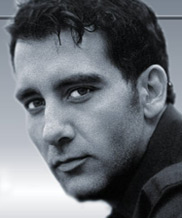
Clive Owen will play Sir Walter Raleigh opposite Cate Blanchett's Elizabeth I in the sequel to Elizabeth, The Golden Age. Both are actors I love. I saw Blanchett from the first row in a production of Hedda Gabler at BAM in Brooklyn, and she was awe-inspiring. I saw Clive Owen walking out of the Mercer Hotel in Soho about a year ago, and he confirmed what I suspected, that wherever he is, he's the coolest character in the joint. But it's not entirely coincidental that we'll have the bonus of a bit more heat from our modern incarnations of Sir Walter Raleigh and Elizabeth I. Sure, standards of beauty change over time, but come on. I think natural selection and the passage of time are working in our favor here. But judge for yourself:


The Departed


Scorsese did not see Infernal Affairs before finishing The Departed; he'd only read the script by Bill Monahan (this and lots of other good tidbits from this interview with Thelma Schoonmaker). As voracious a film buff as he is, I just assumed he'd seen the original, but this makes much more sense to me. Scorsese has never seemed like the type who'd want to remake anything (he did Cape Fear mainly because De Niro pushed him so hard for so long to do it).


Scorsese had to fight to keep the script's conclusion; can you imagine if The Departed was given a Hollywood happy ending? Instead, it has a Scorsese happy ending, one I didn't expect.


After Goodfellas, this seems to be the most well-received, broad appeal Scorsese movie ever. I saw it a few weeks ago now, I can't remember when exactly, but it was odd to see so many young people in the theater for a Scorsese movie. Was it the casting of Matt Damon and Leonardo Dicaprio?


Whoever had to choose how to cast Damon and Dicaprio chose well. It's hard to imagine the movie working as well if they'd played each others parts. Jack Nicholson nearly goes too big with his Frank Costello; at times he almost hijacks the movie the way he did Batman, but how can you begrudge Jack his fun, or Scorsese for making something that feels a bit like a genre pic? If it were a statement to the Academy from Scorsese, this movie might say, "Oh, you just want a fun crime pic? I can turn that out, no problem. See?"


Infernal Affairs had that HK, Tony Leung/Anthony Wong/Eric Tsang cool. The Departed has a manic energy that emanates from Scorsese, the cast, and the new setting. It's not a remake as much as an alternative vision built on that same, wonderful script idea: cat and mouse game between an undercover cop and an undercover mobster who've taken each other's jobs. The Departed shouldn't offend any fans of the original; it may offend some Scorsese purists. It won't force Taxi Driver or Raging Bull or Goodfellas out of the way in the hearts of Scorsese devotees (me: guilty); it doesn't have the psychological heft of those movies.


That same restless camera is here, but many of the moves feel as if they're intended to be sexy (and they are) rather than revealing. Perhaps because of that, occasional continuity problems caught my attention in this movie more than in other Scorsese movies (he's always assembled scenes from such a complex mixture of shots that some continuity jaggedness is to be expected, but his shots are so interesting and the rhythm so swift that those issues never even register on the brain).


We had to watch Goodfellas in a class the other week, and so both movies sat next to each other in my brain. That's a tough comparison for not just The Departed but for any movie, like trying to see which of your selves can stay out later on a Friday night, your 23 year old self or your 32 year old self. But now that most my waking hours are occupied struggling to see my own ideas survive the long, sometimes grueling journey to celluloid, my heart is on the side of the filmmaker. Writing a book, composing a song, making a movie, or critiquing one of those pieces of work...one of those is much easier than the other three. If you're not sure which, count the number of people in the world who do each of those well.


Footnote: I've seen Goodfellas probably about 6 times now. We watched a film print in class in the school theater a week or so ago, and it had been a year and a half since I watched it for my editing class in NYC. I had a lot of schoolwork last week, and I told myself I'd just sit down and watch the beginning before heading home to finish a bunch of work. As soon as the opening credits appeared on screen, zipping from left to right, I was done for. That movie is like heroin. It doesn't let go until the end credits, and though many people refer to DVDs as film school in a box, that movie really does show you another few cards up its sleeve every time.


"The Hardest Button to Button"


Michel Gondry's video for the White Stripes' "The Hardest Button to Button" (Quicktime) was, as is par in Gondry's world, brilliant. The Simpsons' tribute to said video? Pretty damn good, too.


A team of Italians calling themselves HAL9000 has created an 8.6 gigapixel photograph of an Italian fresco by stitching together 1,145 pictures from a Nikon D2X. At 96,679 x 89,000 pixels, it's likely the largest digital image in the world, and on their website you can browse and zoom in on the image.


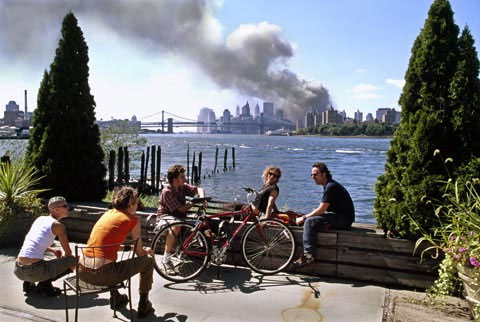
I know I'm late with this, but such is my school workload that I'm really out of it these days.: here's that controversial photo taken on 9/11 by Thomas Hoepker of Magnum Photos. Frank Rich wrote about it in the Times, then on Slate David Platz disagreed with Rich's interpretation, then two of the people in the photo wrote in to defend themselves against Rich and Hoepker's reading of the photo, and finally Hoepker himself weighed in. So in this case, a picture really was worth a thousand words or so.


1001 books you must read before you die--the list. Note that the book that the list is pulled from is not on the list itself, so it's a good thing the list is published on the web.


Hallelujah! Undercover Economist articles are finally available for free on the Financial Times website as of late September. Tim Harford is part of the transformation of economics into a sexy field.


How to turn your photos into Lichtenstein-esque pop art.


The Formula


In this week's New Yorker, Malcolm Gladwell writes about a company which has devised a formula to predict a movie's box office success (also available as a PDF). This company, Epagogix, has a proprietary formula that relies on grading the movie along a huge variety of script or narrative elements (themes, characters, locales, costumes, and on and on), then runs them through a neural network which spits out a predicted box office take.


It sounds like some holy grail for the movie industry, but many caveats apply, as you'd expect. The script has to be graded on those script elements by human beings who read the script. They say the process takes their team a day to do, but if the formula relies on people with particular aesthetic tastes or training, that isn't scalable.


Another issue is that the neural network can only be trained based on past results, by feeding it old screenplays and their box office results. If the public's tastes change, the network has to be retrained, though I wouldn't expect this to be a huge problem.


Finally, if the formula works purely off of scripts, a lousy production might still torpedo the box office. Again, this isn't a problem for Epagogix since it sounds like they're being paid for pre-production script consulting.


I'd be curious to see them use the network to put together an ideal script, a Frankensteinian list of what narrative elements would go into a movie with the highest potential box office. The idea of storytelling being reduced to some formula spit out by a computer is repulsive to the artistic side in me but thrilling to my contrarian, scientific half.


Mulligan?


BFI has a book series titled Modern Classics which highlights important modern films. A classmate of mine was reading a copy of the Eyes Wide Shut volume. On the back cover was a list of the other books in the series.


"Which one does not fit?" asked my classmate. It wasn't difficult to spot.


Curious, I looked up that aberrant volume on Amazon, and there it was: Independence Day (BFI Modern Classics).


But on the BFI website? That volume is, oddly enough, missing. A bit of revisionist publishing?


The odd thing is that the one Amazon review for the Independence Day volume sells the book very well.