
Nibble
One of the things about LA bike culture is that cruisers predominate. Going down the beach boardwalk on your tricked out road bike doesn't impress anyone. Perhaps "The Ride" by Ellsworth is a suitable compromise: a high-tech cruiser. What a beauty, at least until someone knocks you off of it and steals it.
A whole lotta free MP3s over at WuTangCorp.com, home of the Wu-Tang Clan & Killa Beez.
Weng Weng, the 2' 9" Philippine dynamo, Agent Double 0, lives on thanks to YouTube. I think I'm impressed that someone actually took the time to write that rap.
Technorati Tags: bike, cycling, gadgets, LA, music, mp3, video, youtube
Glimpses of the short Peter Jackson shot on the Red prototypes
Here are some 4K res JPEGs from the short. Here's a short snippet of the short at 1K res (you'll probably have to try one of the mirrors at this point). It's such a short clip that it's hard to draw any sweeping conclusions, but that little bit is pretty sweet. In particular, it has a film-like DOF (Jackson's DP shot using Cooke S4 primes and Angenieux Primo zooms).
Here are some war stories from the shoot itself courtesy of HD For Indies. At this point, I'd sell my car to get one of these Reds, but I don't think that would be enough (literally!).
Technorati Tags: camcorder, camera, cinematography, filmmaking, gadgets, movies, Red
The rule of "four to fourteen"
From an interview with Renaissance man and film editor extraordinaire Walter Murch:
BLDGBLOG: When you’re actually editing a film, do you ever become aware of this kind of underlying structure, or architecture, amongst the scenes?
Murch: There are little hints of underlying cinematic structures now and then. For instance: to make a convincing action sequence requires, on average, fourteen different camera angles a minute. I don’t mean fourteen cuts – you can have many more than fourteen cuts per minute – but fourteen new views. Let’s say there is a one-minute action scene with thirty cuts, so that the average length of each is two seconds – but, of those thirty cuts, sixteen of them will be repeats of a previous camera angle.
Now what you have to keep in mind is that the perceiving brain reacts differently to completely new visual information than it does to something it has seen before. In the second case, there is already a familiar template into which the information can be placed, so it can be taken in faster and more readily.
So with fourteen “untemplated
The Bourne Ultimatum trailer
Yahoo snags the early online screening rights to The Bourne Ultimatum trailer. Half of it is recycled footage from the old movies.
I read the books a long time ago (junior high?), and based on my admittedly hazy memory of the books, the movies have completely gone off on their own storyline. What happened to Carlos the Jackal?
Technorati Tags: film, movies, trailer
Updates from the Apple Keynote event at NAB
Updates from today's Apple event at NAB thanks to Engadget. And the relevant info is at Apple's website now, too.
Final Cut Studio 2 includes Final Cut Pro 6, Motion 3, Soundtrack Pro 2, Color, Compressor 3, and DVD Studio Pro 4.
There's also a marketing video talking about how to use FCP6 with the Red camera, and here's the NAB reel highlighting content edited by FCP.
I wish I had time to sift through all the details today, but I have a lot of work to do for class today, using, what do you know, FCP.
Technorati Tags: Apple, filmmaking, finalcutpro, hd, Mac, editing, software, video
Trying to laugh through the tears
Next year, I'm mailing my taxes via UPS or Fedex. Still fuming and on hold waiting for various financial institutions to answer their customer service lines and resend my 1099's. Argh. But through the tears, perhaps a few nuggets of laughter...
Google Maps directions for New York, NY to Paris, France...skip ahead to step 23 (via a Sports Guy reader)
Also funny, from the same Sports Guy column, this box score from the San Antonio-Phoenix NBA game. Skip down to Robert Horry's line for the Spurs.
Ryanair CEO vows to offer flights from the U.S. to the UK for less than $10.30. You'd probably pay more because Ryanair charges for all sorts of basics a la carte, but still.
Some progress today in the fight against global warming.
Jackie and Jet team up (with an assist from Yuen Woo Ping). It would have been a dream of a pairing if they two of them were about 10 to 15 years younger, but we'll take what we can get. Meanwhile, the Weinstein Co. could use some wire work.
Tiger Woods Reveals He Is Zach Johnson.

Technorati Tags: Apple, basketball, google, humor, movies, NBA, golf, sports, theonion, travel
Killer
Caught Killer of Sheep with some of my classmates tonight. Charles Burnett's 1977 MFA Thesis Film at UCLA was shot in Watts on weekends and could not be distributed due to the cost of music licensing. Ross Lipman of the UCLA Film & Television Archive restored the movie and transferred it to 35mm from 16mm, Steven Soderbergh put up half of the $150,000 to secure the music rights, and the movie is making a limited tour of the country. It is a stunning black and white elegy to life in the ghetto, and that's before considering that it was shot as a film school thesis.
Thank goodness they secured the music rights (to all except "Unforgettable" by Dinah Washington for the last scene of the movie, but it's replaced by an encore performance of "This Bitter Earth" which is just as gorgeous); the soundtrack is amazing.
Technorati Tags: film, filmmaking, filmschool, movies
Does a keyboard and an internet connection a film critic make?
Ronald Bergan wrote a post at the Guardian titled "What every film critic must know."
...it seems that film, the most accessible and popular art form, is just not treated on the same level or with the same degree of seriousness as the other arts.
Unfortunately, this has led to a deterioration in film criticism, which has become primarily descriptive, anecdotal and subjectively evaluative rather than analytical. Most reviewers deal primarily with the content of a film - anybody can tell you what a film is about - rather than the style, because they do not have the necessary knowledge to do so.
He goes on to list what he believes every film critic should know (difference between a fill a key light, e.g.), have read (Eisenstein's The Film Sense, for one), or seen (Jean-Luc Godard's Histoire(s) du Cinéma). The good thing is, I should be qualified to be a film critic by the time I graduate film school if other avenues don't work out. The comments on Bergan's post are, as expected, heated. I think his requirements are too extensive, but I tend to agree with him more than I disagree.
I don't read as much film criticism as I once did. One reason is that few critics write well enough that their reviews are enjoyable to read as just pieces of writing. Another reason is what Bergan notes about reviews becoming too descriptive. A third reason is that it's difficult to find a reviewer whose tastes match well enough with your own that their opinions can serve as positive leading indicators (though a great reviewer can educate even when you disagree with them). I also enjoy seeing movies fresh, and I'm not just talking about spoiler-free. Having someone's opinion in my brain can subconsciously push me towards agreement or disagreement even before I've seen the movie.
I also don't watch as many movies in theaters as I used to. With so many classic movies now available on DVD, there's greater competition for my entertainment consumption, and I've seen so many movies that I'm suffering from severe Hollywood fatigue.
One worthwhile type of film criticism, to me, is the review that articulates why I feel a certain way about a movie. Some of Bergan's requirements about film stylistic techniques are helpful in this regard, but Pauline Kael provided many of those mini epiphanies and I never thought of her as a very technical film critic. Much of film influences us subconsciously, but having stylistic choices brought to my attention doesn't detract from the effect, it only enhances my appreciation of the filmmakers' craft. I took a class in fall quarter of film style in which we watched one movie a week and discussed the stylistic choices in a particular area, for example in editing or camera movement or story structure. It was one of the most instructive classes I've ever taken and made me aware of how rare good film style criticism is these days.
Lone contrarian voices in a sea of agreement catch my attention as well, though only if they're critics who seem to know something about film. I'm naturally attracted to contrarian opinions. Consensus among a broad group of critics that a movie is terrible or great will pique my curiosity; the former is usually a decent sign that a movie is, indeed, awful, while the latter seems to throw down a gauntlet. I can't help but see what the commotion is all about.
I've met perhaps five people in my life whose opinions about movies always interest me, but I can't remember who two of them are.
But despite the somewhat depressing state of film criticism, I still find it far more useful than music or book criticism. I don't understand enough about music, but most music criticism seems to me purely subjective. At the end of the day, what most matters to me when reading a review is to feel as if an intelligent mind is grappling with their reactions to a piece of art and sharing their revelations.
Technorati Tags: film, movies, criticism
In a world...
Profile of Dan LaFontaine, the voiceover actor of choice for movie trailers and TV ads. I got a laugh just listening to the intro on his website.
Technorati Tags: movies, ads, trailer, tv
Spring break's over
Auto porn: a part by part look at the new BMW M3 V8 engine. Featuring brake energy regeneration (reminds of of the old Tiger Woods/BMW joke). Hear the sound of the new V-8 during acceleration. Check out these headers, and imagine them glowing bright red. If Paris were an auto-snob, she'd say, "That's hot."

As one article noted, these images of the BMW engine headers recall Edward Weston's photo of a pepper. Compare:

Arnold Kling on the single-payer health care:
- People are forced to buy something that they don't seem to want
- Provided by a monopoly
- Paid for by higher taxes
Three funny Onion sports headlines:
- Greg Oden On Final Four Appearance: 'I'm Happier Than I've Been In 30 Years'
- Confident Phil Mickelson Guarantees Tiger Woods Will Win Masters
- Tiger Woods Signs $15 Million Deal To Endorse Alex Rodriguez
TigerCinema.com seeks to be a Netflix for Asian DVDs. They state that 95% of their titles have English subtitles and that most are Region 1. Sadly, the search and browse functions are somewhat crude. No browse by country? director? actor? The browse tree for Martial Arts is only one level deep! Good luck delving through 23 pages of results. The selection is decent but not as complete as I'd expect for such a niche-focused site. It's probably not entirely their fault as there are so many editions of many Asian movies, and many editions are out of print or hard to find. They probably can't stock enough copies of certain titles. For now, there's still eBay and HKFlix and YesAsia and sites like that for those willing to buy. Many eBay DVDs are simply burned copies and will not last very long; I treat most of those as disposable copies.
One of the best channels for showing off your high definition TV is Discovery HD Theater. Perhaps the best program to air on that channel yet is Planet Earth which debuted last Sunday. Apparently viewers agreed as the show snared 12 million viewers total over 3 hours and had a 3.6 HH rating, Discovery's third highest ever. I've only watched the first episode, "Pole to Pole," and it was spectacular, all of the footage having been shot in high definition. They say porn is the killer application for any new video technology, but IMHO sports and nature shows are the most desirable types of programming for HD.
Technorati Tags: autos, bmw, cars, economics, hd, healthcare, humor, dvd, sports, theonion
Army of Shadows
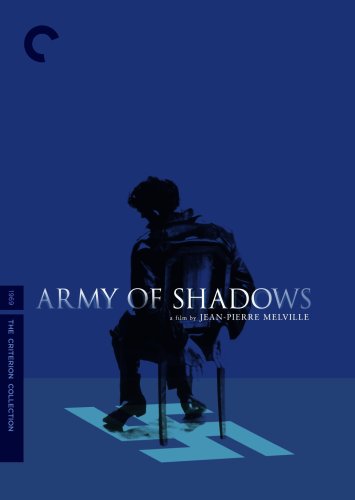
Army of Shadows - Criterion Collection arrives on DVD from the Criterion Collection May 15! It's perhaps the most critically lauded film of 2006 (even though opened in 1969, it took 37 years to find a U.S. release). It was the best movie I saw last year, but I am an avowed Melville freak.
Technorati Tags: dvd, film, movies, video
Well(es) Well(es)
Warner Brothers to release The Magnificent Ambersons and Journey Into Fear on DVD in 2008? From the chat:
Q: All's well that ends Welles... My subject is Orson Welles. When will WB release The Magnificent Ambersons and/or Journey Into Fear? Or heck, any other Orson Welles related stuff? Including HD.
[WARNER]: We have finally found good elements on AMBERSONS, and plan to release both AMBERSONS and JOURNEY in 2008.
Technorati Tags: dvd, film, movies, video
Triangle
Johnnie To, Ringo Lam, and Tsui Hark will debut their movie Triangle at Cannes. The fabled triumvirate of Hong Kong action film directors shared directing duties, each helming one 30 minute segment of the film. Hark starts, Lam takes over, and To anchors, all using the same cast and crew. Movies in which each director submits a separate short haven't impressed in the past, but this is a twist on the concept and I'm excited to screen the results.
David Bordwell, a great friend to Asian cinema, was invited to visit the set. He shares this interesting tidbit about HK films: almost all of them are shot MOS (without sound), speeding up productions and unleashing the visuals. Italian movies were shot this way into the 1960's though I've never heard much about the impact of that on their productions.
Bordwell's account of his set visit is well worth a read for fans of HK cinema and Johnnie To as Bordwell has lots of great pics and notes on To's filmmaking technique.
Johnnie To's trademark visual style is a camera that's always in motion, but rarely handheld. Bordwell snagged this choice quote from Shan Ding:
The handheld camera covers 3 mistakes: Bad acting, bad set design, and bad directing.
Technorati Tags: cinematography, film, hk, movies, filmmaking
300
Before heading out of town for spring break, I took in a movie for the first time in months, a showing of 300 at the Bridge Cinema de Lux IMAX down by LAX. The ironic thing about first year film school is that you have no time to go see any movies. Every one expects film school students to be up on every movie, but I had to ask friends about what was good and out in theaters. The flick with the most buzz was the Frank Miller comic book adaptation.
For my sleep-deprived brain, it was perhaps a suitable film, the cinematic equivalent of a lava lamp. If that sounds like damnation with faint praise, well...
The visuals are occasionally beautiful, but I was driven insane by the huge number of shots that were out of focus. Perhaps the IMAX screen put the soft focus in boldface, but one of my classmates, a cinematography student, also noticed it. $60 million may be what passes for a small budget for an action film these days, but it's plenty to afford some better focus pullers. Was the soft focus a result of post-production?
An example is a close-up of Dominic West just before he introduces Lena Headey to the, uh, business end of his spear. It's a by the shoulder shot angled up at West's Theron, and his face is totally blurry. In another shot early in the movie, a close-up of Leonidas, it's his ears that are sharp in focus while his eyes are soft. I tried to look at his eyes, but the focus kept pulling my eyes away, to the edges of the frame.
The characters are as flat as the comic book pages from which they were pulled, the most depth any of them displays being the grooves demarcating each of their ab muscles. Gerard Butler has a good face, but the most he can do with a thin part is to shout his lines with the CAPS LOCK button depressed. THIS IS SPARTA! COME AND GET THEM! TONIGHT WE DINE IN HELL! TAKE FROM THEM EVERYTHING! THIS IS WHERE THEY DIE! The characters don't travel in arcs in this film; they are launched fully formed out of a cannon, weapon in hand, ready to behead the first head they encounter. Leonidas and his queen Gorgo are defiant, start to finish.
The film is tinted, not just with a gorgeous amber and red palette but also with more than a hint of racism. I don't have much of an issue with the skin color as that may be historically accurate, but the movie has no qualms with exaggeration to emphasize the filmmakers' distaste for the enemy. Xerxes is not only given heavy eyeshadow, but he has no eyelight or pupils. His voice sounds like it was run through the "drag queen reverb" filter. Xerxes' elite fighting force of Immortals wear dramatic tragedy masks that, when removed, reveal hideous, deformed faces. What race of people are they supposed to be? Xerxes' army also employs a series of horrific freaks, including a massive blob of a man with massive knives for forearms and a 10 foot beast of a man whom tosses Spartans around like rag dolls. The traitor Ephialtes is, not surprisingly, a hunchback. Meanwhile, a glimpse inside the Persian tents reveals a nonstop series of beheadings and orgies.
Many movies choose good-looking actors to play the heroes and more hideous ones to play the baddies, but a bit of nuance would have helped the story to rise above its pulp comic book roots. But none of this seems to matter much as the unique visual look of the trailer and strong word of mouth have launched it to the top of the 2007 box office list. On IMDb right now, 300 is ranked number 214 all time based on user ratings. 214 all time, ahead of movies like Rififi, The Lost Weekend, and Dial M for Murder, and just a hair behind movies like Scarface, Bonnie and Clyde, and High and Low.
What worries me is the thought that director Zack Snyder might paint his next movie project with the same black and white broad brush strokes. That project is Watchmen, and it's ten times the graphic novel that 300 was.
Technorati Tags: film, filmschool, movies, comicbooks
Dramedy
There was a TV show called Film School on cable just two or three years ago that followed some students at NYU Film School. I watched a few episodes and never got sucked in, but perhaps that was because the show followed older students instead of first years (at least I believe it did; my memory of the show is fuzzy).
My classmates and I all shot a short project last quarter using a roll of 16mm film donated by the school. This quarter, we were given four days to shoot a 6 page script. We were split into three groups, my group being, once again, the group missing a seventh member.
The one condition that remained the same from our first quarter project was that we'd be assigned one of seven crew positions on each shoot each weekend. Each person would serve as one of the following crew members exactly once: director, assistant director, director of photography, gaffer, sound mixer, boom operator (since I was in the group short one person, we had to find our own boom operators).
The key point is that first year film school directors are assigned classmates to serve as crew while second and third years usually choose their own crew members. Choosing your own crew probably leads to a more pleasant, harmonious shoot. But if you want the type of hysterical drama that makes for engaging reality TV, the type that inspires a sense of car crash rubbernecking on the part of the audience, filling them with a soothing schadenfreude, then handing a whole class of directors a random set of crew members is a brilliant concept.
Every one in the class has one position they're best at, and one position they're worst at. You find out more about a person when they serve in either of those capacities than at any other time. Students in their second or third year shared stories of tears, fistfights, and shouting matches. After a rather smooth fall quarter on our 2-minute film shoots, I thought we'd come through the winter quarter relatively unscathed. But ah, the pressure of the film set should not be underestimated.
Because we were limited to a 4 hour shoot in the fall quarter, the damage from personality clashes and skills deficiencies were minimized. But this quarter, with four days of 12 hour shoots (and more, if a director wanted to push his cast and crew into that dark forest called overtime), tiny cracks in each production team spread and grew into gaping fissures.
Movie sets foster rumor the way NYC trash attracts rats. Perhaps it's the division of a crew into departments, each with its own culture and responsibilities. I've always been intimidated by union grips. Actors, of course, have a certain exalted status on set. The whole process of making a movie creates dozens of micro-stories. Did you hear that this actor was late to set this morning? Did you know that so and so lost his mind and yelled at so and so (see Russell, David O.)? Yes, it's true, she just started crying. I think he was on something--did you see his eyes?
Our first quarter professor told us of recent studies that show that humans thrive on gossip, that it's a sociological instinct. After this quarter, I'm starting to believe him. Splitting our class into three different groups for the quarter promoted what is already a gossip-filled environment. Not only did we have stories to share from our own sets, but whenever we ran into someone from one of the other two groups on break, stories would be swapped as readily as cigarettes.
This type of environment walks a fine line between therapeutic and toxic. At Amazon we always liked to say that brands are like quick-drying cement. It's not different with a person's reputation. That first impression is a bear to shed.
I tend to shy away from drama. It's not my style to act out, and for the most part I try to keep emotion out of disagreements. But it only takes a single person to detonate a group.
And so, at the end of our second quarter of film school, it becomes clearer who will work with whom next year when each director is responsible for assembling his or her own crew. I think most people have at least a half dozen or so people they'd be willing to work for, and there's always outside help, especially in LA. 2nd year shoots should be smoother sailing, but they'll make for lousy TV.
Technorati Tags: filmschool, movies
We will make lots of money!
Another entry in the "movie trailers overflowing with choral chanting of apocalyptic nature to proclaim the movie's action-packed dramatic spectacularity." Every time one of these trailers comes up on screen I start to chuckle at the sheer marketing aggrandizement (the trailers for Spiderman 3 fall into this category also).
Technorati Tags: movies, trailer
The Big Red One
The Nike+iPod is a fun running accessory, but exercise caution before using it as a serious training tool.
David Pogue offers an overview of Grandcentral, a site that offers to consolidate all your phone numbers under one phone number which will ring all your phones simultaneously when dialed. I signed up during the beta a couple months ago and got a number but never used it. Pogue notes a number of nifty features that have been added since their launch, so perhaps it's time for me to dig that number out.
Neal Gabler recently wrote an op-ed in the LATimes titled "The Movie Magic is Gone." Kristin Thompson finds seven points in Gabler's article and states her case against each.
Another film shot mostly digitally: Zodiac was shot uncompressed with the Viper FilmStream camera in 4:4:4 1920x1080/24p. Here's a thread on cinematography.com discussing the look of the film. Here's the product page for the Viper, and here's an American Cinematographer article in which Paul Cameron discusses his experimentation with the Viper in shooting Collateral.
Right now, the HD video camera receiving the most use at our school is the Panasonic HVX200. The unreleased HD video camera with the most buzz right now is the Red One. Side project of Oakley founder Jim Jannard, the Red One looks more like some powerful weapon from some first person shooter than a video camera. Here's a gallery of video footage shot with the Red One, and here's one massive 4K frame capture down-converted to 8-bit JPG. The big buzz around this camera is its sensor size: 24.4mm x 13.7mm (Super35mm). The camera is intended to offer the same depth of field as 35mm Cine Lenses instead of the higher depth of field that characterizes most video. The Red One will retail for $17,500.


A working editor weighs in on Avid vs. Apple, having recently switched from Avid Media Composer to Apple's Final Cut Pro. I've tinkered with Media Composer but am more familiar with Final Cut Pro. I like some things about Media Composer better, and it is still more the industry standard for big motion pictures, but Final Cut Pro just has more momentum and resources behind it. Most film students can't afford an Avid system and are taught to edit on Final Cut Pro systems. I think Avid needs to make a stronger push to make inroads with the next generation of film editors.
Technorati Tags: Apple, business, camcorder, editing, film, filmmaking, finalcutpro, fitness, gadgets, hd, ipod, movies, phone, avid, running, sports, tech, video