The John Wick Universe is Cancel Culture

“Si vis pacem para bellum”

translated

“If you want peace, prepare for war”

I hadn’t planned on seeing John Wick 3 - Parabellum, but out for a walk in Stockholm in May, I got caught in a sudden downpour without an umbrella. I was in Sweden for the first time thanks to an invitation from the Spotify product team and had decided to spend some of my downtime seeing the city. Sweden, by the way, is the country with the second highest unicorns per capita. Fascinating, and a topic for another day. I sprinted out of the rain and into the nearest building, which happened to be a movie theater. Checking Dark Sky on my phone, the rain didn’t look to let up for another hour or two, so I scanned the theater listings and found a film in English. John Wick 3: Parabellum it was.

Like many I enjoyed the first John Wick movie for its lean and elegant plot and balletic fight choreography. Keanu Reeves was inspired casting given his unfussy acting style. However, I thought the sequel was unnecessary. I wasn’t expecting much from yet another entry, the third, but I rarely regret spending two hours in a darkened theater. Watching an American film in the company of a Swedish audience also promised to be a form of cultural field work, and on that front, I felt fortunate the house was packed with locals.

John Wick 3 - Parabellum begins directly after the events of the previous film, and at first, all seemed familiar. But after having spent two films worth of time in this universe already, sometime midway through the third film, it dawned on me. The rules of this film franchise mapped with uncanny precision to something that everyone had been complaining about to me for years now: cancel culture.

With that, the films took on heightened resonance. Here I present my theory of John Wick Universe as an allegory of cancel culture.

[SPOILER ALERT: Here is where I must warn people who haven’t seen the films that I will reveal key plot points to the three Wick films below. I don’t feel like the charms of this film series lie in the plot details—what happens isn’t surprising in the least to even the most casual of action film fans—but I disagree with those who say spoiler culture has ruined film criticism. Instead I’m happy to let my readers choose their own acceptable quota of narrative novelty. If you prefer not to learn the plots of the John Wick films, stop reading here.]

Wick’s character motivation can be described thus: my name is John Wick. You stole my car. You killed my dog. Prepare to die.

Reeves plays Wick from cinema’s storied tradition of zen-like hit men, almost placid in their mastery of their craft, which, in his case, is the violent dispatch of other humans from the realm of the living. This is Alain Delon in Le Samourai, Robert De Niro in Heat, Jean Reno as Victor "The Cleaner" in La Femme Nikita. Less sexual than Bond, not quite as overtly cruel as Matz and Jacamon’s Killer. These hit men have a heart, but their highest order bit is the code by which they live. Whether personal or business, there's little difference, the job is killing.

And kill he does. In John Wick 3: Parabellum the signature choreography of death remains, a style which can only be described as baroque. Not John Wick for a single gunshot to the head when he can first maim with a few amuse bouche bullets to the torso and limbs. Why engage in a simple fist fight when one can hold a confrontation in a store filled with display cases lined with all manner of knives (in case of emergency, break glass with the skull of your combatant). Why simply perforate assailants with automatic weapons when they can be simultaneously be relieved of their genitals by an attack dog?

It wasn’t until Michael Bay’s terrible 6 Underground on Netflix that I saw a film with more cartoonish violence this year.

For some, this is entertainment enough. I’ll never hesitate to offer my opinions on any piece of entertainment, but I do not begrudge anyone their pleasures. Certainly, the crowd of Swedes who laughed and cheered at the escalating violence seemed more than entertained. For me, however, films are even more compelling when they speak to the world outside the edges of the screen. I'm nothing if not a sucker for subtext. What fascinated me about John Wick was how its absurdist universe acted as a wry commentary on cancel culture.

Do I think this subtext was intentional? Doubtful. Some filmmakers reward subtextual readings more than others. Still, the advantage of making a film with such a lean universe design is its semiotic flexibility.

John Wick’s real name, we learn, is Jardani Jovonovich, a Belarussian gypsy raised as an assassin. Wick is nicknamed Baba Yaga, the Boogeyman, for he is the master of assassination. Who are most gifted in using social media to sow chaos and division in the world, especially the United States, than the Russians? Having lost the Cold War they’ve come back in a more fluid and confounding form.

When the first film begins, Wick has left that world of violence behind for a peaceful domestic life with his wife Helen. But she dies from an illness, though not before leaving him a beagle to keep him company. The dog, along with Wick’s car, a 1969 Ford Mustang Mach 1, are recognizable to anyone as the two iconic totems of an American’s most sacred values.

When a group of Russian gangsters try to buy his car and Wick refuses, they break into his home, steal the car, and kill the dog. In Pulp Fiction, John Travolta complains to Eric Stoltz that some vandals keyed his car. Stoltz commiserates.

“They should be fuckin’ killed, man. No trial, no jury, straight to execution,” he says.

“What’s more chicken-shit than fuckin’ with a man’s automobile?” says Travolta. “Don’t fuck with another man’s vehicle.”

“You don’t do it,” agrees Stoltz.


In America, the car is the symbol of a man’s property and an expression of his individual freedom. The dog is the symbol of unconditional loyalty, man’s faithful companion as he rules over his domain.

The two totems of American sacred values

In a social media context, we can think of Wick’s dog and his car as representing those beliefs we hold sacred. When Wick loses his car and his dog, he is every one of us who sees one of the values we consider intrinsic to our personal identity impugned by some stranger on social media. That the perpetrators are Russian is nothing if not reminiscent of Russian agents sowing discord in American society in the run up to the 2016 Presidential election.

It turns out John used to work for the father of the leader of the gangsters who stole his car and killed his dog. That father, Viggo, upon learning what his son Iosef has done, calls Wick and begs him to let it go. Don’t feed the trolls, we are told time and again. But we, like Wick, cannot. His permanent sabbatical from assassination has come to an end.

As on social media, violence begets violence. Since Wick refuses to let the matter go, Viggo, to protect his son, sends a preemptive hit squad to assassinate Wick at his home. We never fight a single target on social media because the public broadcast nature of social media always rallies others to the cause. The first John Wick film proceeds from there as a series of attacks and counterattacks until Wick emerges, alive, bloodied, with a new dog, a pit bull he frees from an animal clinic. Viggo, Iosef, and what seems like a hundred or so henchmen are dead. The new dog symbolizes a brief moment of peace for Wick, just as we sometimes emerge from our skirmishes online feeling as if we have the moral high ground, our honor once again intact.

John Wick 2 begins with him retrieving his car from a chop shop owned by Viggo's brother, which requires Wick to kill not only Viggo’s brother but his fellow goons. The car takes serious damage in the firefight, much like the beating we take defending ourselves online, but Wick eventually emerges with his car and new dog and then returns home to bury his weapons cache. He thinks he is out of the game once again.

As anyone who has participated in culture wars knows, any victory is temporary and pyrrhic.

Out of the blue, Santino D’Antonio visits Wick at his home and calls in a marker, represented in the films by a medallion with a drop of blood from the debtor. Santino needs Wick to become an assassin again, just as various friends online call on us to take their side in various online battles.

John refuses. He wants out. The marker is the marker, though. If you won’t defend your values, then can you say you really have any? Santino reminds John of this in a not-so-subtle way: he blows up Wick’s house with a grenade launcher.

This brings us to The Continental, the unique hotel chain at the heart of the John Wick universe. Their Manhattan branch is run by Winston (Ian McShane) and staffed by the always courteous and professional concierge Charon (Lance Reddick). Now homeless, Wick retreats to the Continental for refuge. The entire Continental hotel chain lives under the aegis of the High Table, like one of the W Hotels in the former Starwood and now Marriott network.

The Continental hotel chain stands in for our social media platforms. Like them, The Continental claims neutrality—no killing is allowed on Continental grounds—yet they happily arm assassins with all manners of weapons, like Twitter arming people with the quote tweet, the AK-47 of social media. They even employ a weapons sommelier.

The Continental sets all sorts of very specific policies that seem to be in conflict with each other; do they want civility or violence? Visitors to the Continental, like Wick, vacillate between wanting them to enforce rules and wondering who put them in charge in the first place. In other words, a mirror of the tension between users and the social networks that dominate the modern internet.

At any rate, Winston reminds Wick he must honor the marker from Santino, because them’s the rules. These markers are like metaphors for engagement, the debt we pay social networks for the privilege of their services and distribution. Social media platforms do not want violence on their grounds, yet they live through user engagement. The only way to not have any markers on your ledger is to never accrue a debt in the first place, but Wick was raised in the golden age of social networks, where it was near impossible to avoid being active on them. Bowing to the marker, Wick accedes to Santino’s request to assassinate his sister so Santino can assume her spot on the High Table council.

Wick carries out the mission, with great reluctance, only to have Santino turn around and put a $7 million contract on Wick for murdering his sister. This is akin to battling your enemies on social media platforms, creating the engagement that platforms thrive off of, only to have them turn around and lock your account for having done so. Many a person I know has complained about just such a betrayal. Pour one out for David Simon and his periodic bans on Twitter for eviscerating his opponents in a blaze of profanity.

Wick, as is his style, comes after Santino, who retreats to the safety of the Continental, where no violence is allowed. But Wick has been betrayed, and personal values now take precedence over the platform rules of The Continental. He pursues Santino onto hotel grounds and guns him down in front of Winston.

As penalty for conducting assassin business on Continental grounds, the High Table doubles the bounty on Wick to $14 million and broadcasts it globally. As the second film ends, Winston informs Wick of the bounty and gives him an hour head start to run. He sets off with his pit bull through Central Park as cell phones start ringing throughout the park. Wick has been true to his beliefs, as symbolized by the dog by his side, but the outrage mob is about to be set loose on him.

John Wick 3: Parabellum picks up from there. Wick is on the run through the rain of Manhattan, glancing at his watch as the seconds tick down to the global bounty becoming official.

In the Wick universe, official High Table business is processed through a central office by dozens of men and women dressed like old school phone switch operators, all of whom go about their jobs with an almost cheerful professionalism. Anyone who has ever received an impassive automatic reply from a social media customer service department after reporting some vicious attack can empathize with the almost comical formality of the Kafkaesque institution in the face of what feels like emotional terrorism.

That the bounty is put out by the High Table feels appropriate. It’s because of the algorithmic distribution of social media platforms that the asymmetric attack of the bloodthirsty mob achieves modern levels of scale and precision. The High Table seems elusive, at times arbitrary, just like the moderation policies of social networks. Winston at time seems friendly to John, yet he also stands by as the mob prepares to set upon Wick. Many users of Facebook, Twitter, Instagram, Reddit, and so on can relate to this love-hate relationship with those platforms.

As soon as Wick’s bounty goes global, seemingly every next person on the street comes sets upon him with the nearest weapon at hand. Anyone who has been attacked by an online mob, or even mildly harassed, is familiar with this uniquely modern sensation of being set upon by complete strangers. The Wick films give online mobs physical form. These random assassins are the Twitter eggs with usernames like pepe298174.

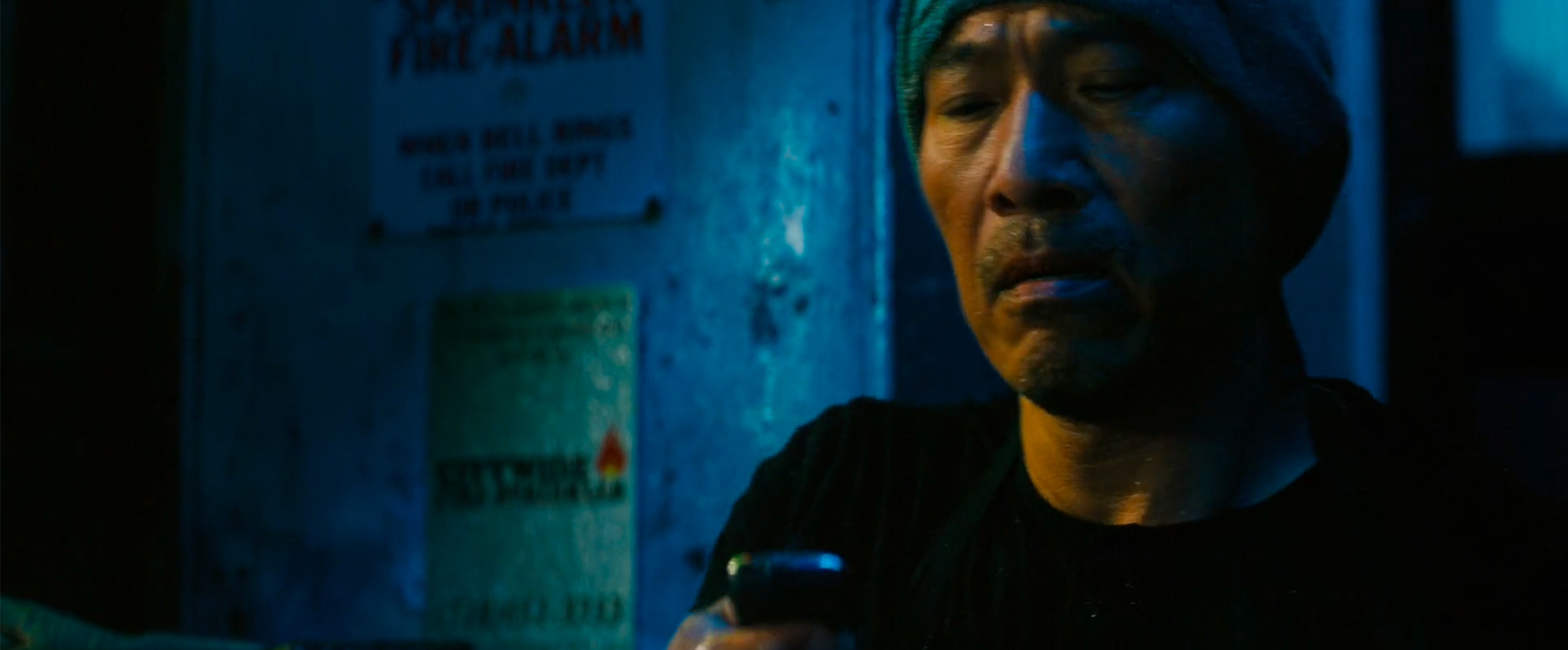
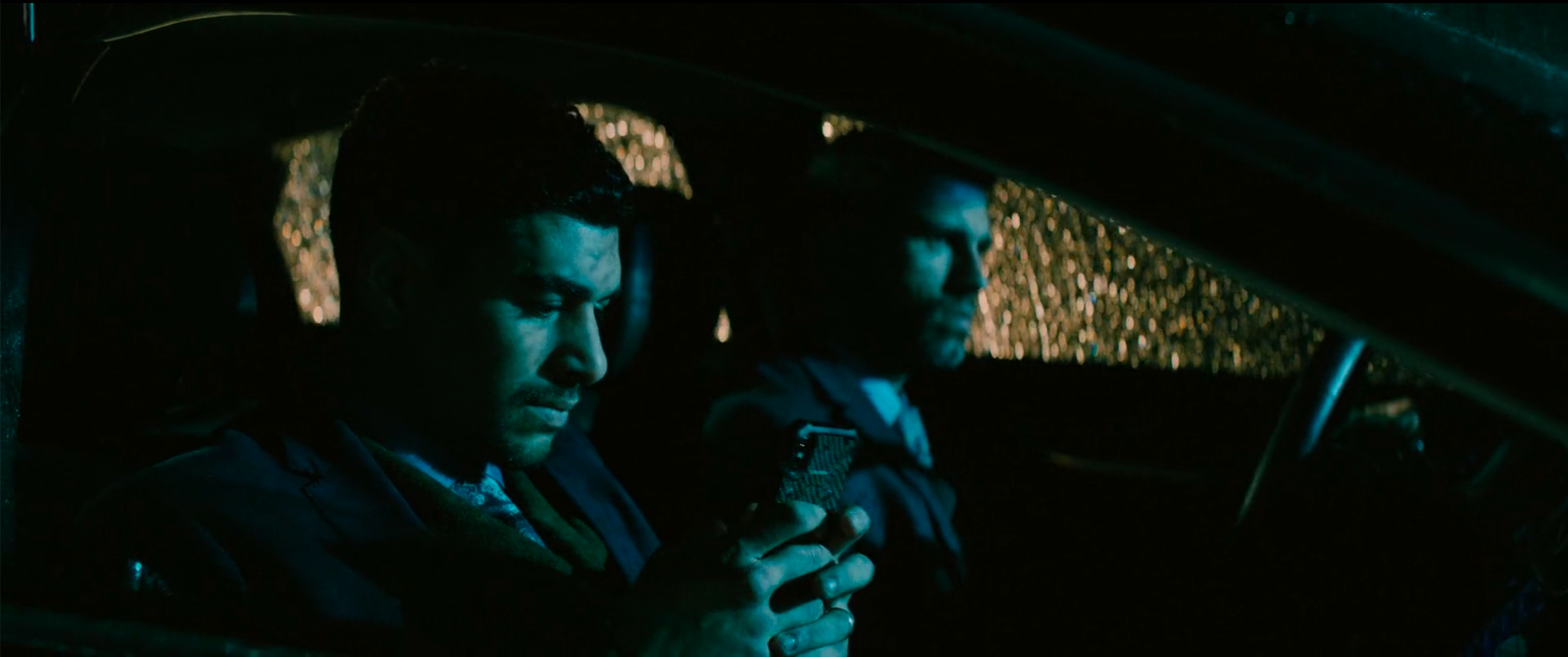
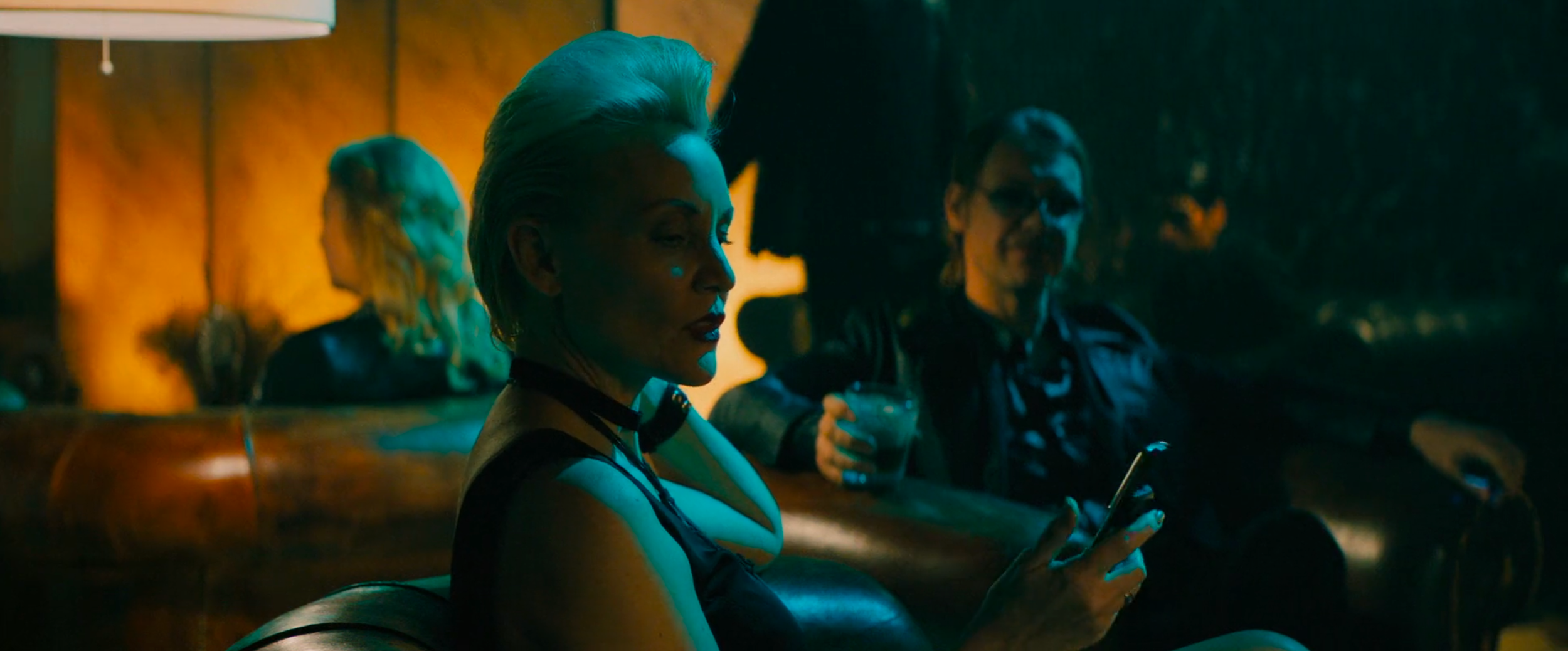
Even more perfect, strangers attack John Wick only after glancing at their phones and receiving word of the bounty. How do outrage mobs coalesce in the online world? From people staring at social media on their phones and locating the next target to be cancelled. The High Table’s bounty system, with its mobile notifications, is nothing less than a formalization of the mechanisms by which social networks enable cancel culture.
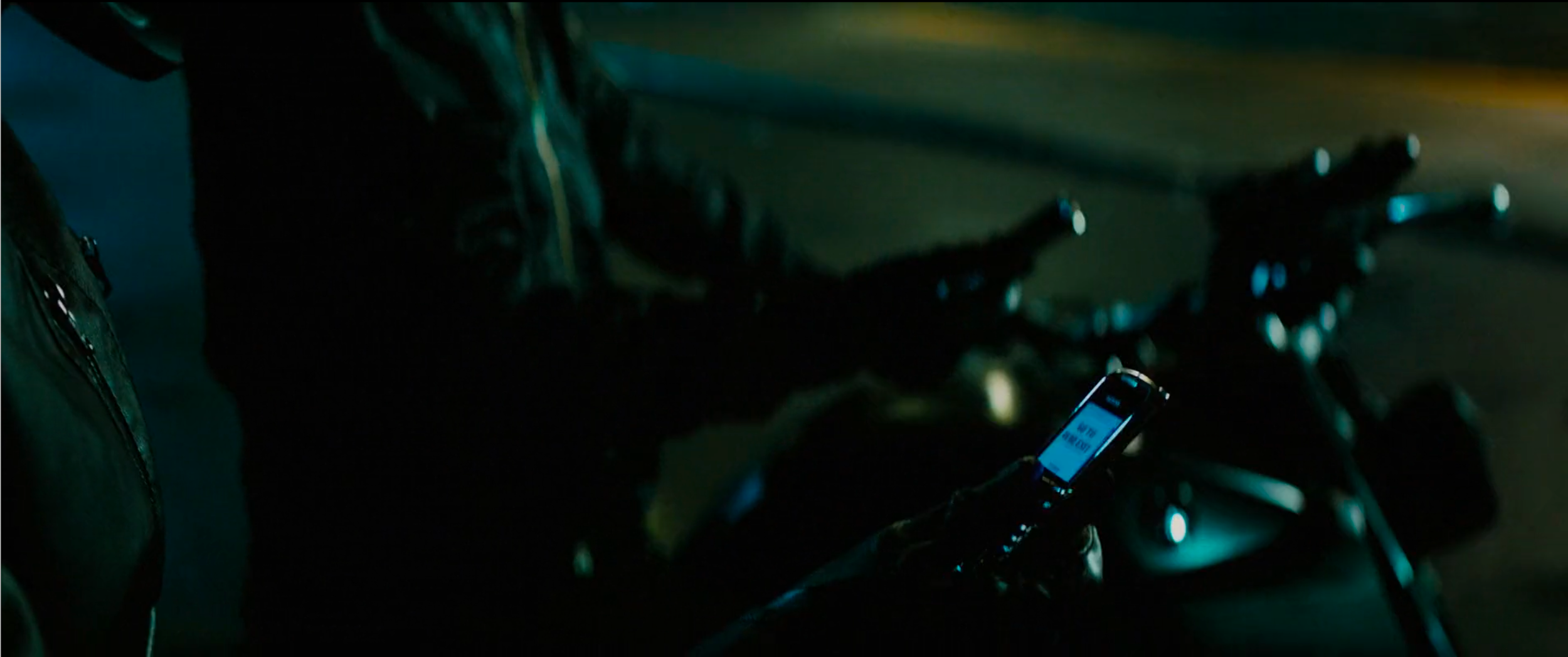
Wick dispatches one attacker after the other with every weapon at hand, whether axe or handgun or, in the first case, a hardcover book (when you absolutely, positively, have to snap a man’s neck using a book lodged in his jaw, a flimsy paperback or e-book just will not do).

I’ve talked to liberals who’ve been set upon by the alt-right. Women who’ve been attacked by gamers. Creatives who are set upon by outraged fans. Conservatives who feel swarmed by SJW’s. Everyone feels unjustly attacked by faceless mobs, everyone is aggrieved. Everyone feels they are standing up for their truth and their principles, like John Wick, while mindless strangers attack from all sides. John Wick is the avatar of the modern social media user, the "righteous man beset on all sides by the inequities of the selfish and the tyranny of evil men."

Just before the bounty goes live, Wick stops by one of those doctors in the movies that caters to assassins and mobsters, the ones with fantastic service, always willing to provide bullet removal surgery on demand to walk-ins. Wick is bleeding from a shoulder wound inflicted by an overzealous assassin who tried to take John out before the bounty went official. Wick begs the doctor to patch him up, and he does, even pointing John to some medicine for the pain. But before Wick leaves, the doctor asks John to shoot him twice, to make it seem as if Wick coerced him into helping him. The doctor knows it is near impossible to stay neutral in the culture wars; if you’re not on one side you’re on the other. Ask Maggie Haberman.

John calls in a marker from a woman known as the Director (Anjelica Huston). She runs a ballet theater called the Ruska Roma that doubles as some sort of training ground for assassins; it’s implied that Wick learned his trade there. Once again, the blind loyalty to this marker system perpetuates a cycle of violence. Huston would rather not be involved, admonishing Wick, “You honor me by bringing death to my front door.”

Wick retorts in Russian, “I am a child of the Belarus. An orphan of your tribe. You are bound to help me.” He explicitly evokes the tribalism inherent in humans, the us vs. them impulse that social media amplifies. And then, in English, “You are bound, and I am owed.” The particular power of tribalism is the near impossibility of being neutral; to not pick any side is to be against everyone. The Director succumbs.

The face you make when your friend tags you into his or her online battle and you just want to watch YouTube

You were at my wedding Denise

As she walks him through the backstage training area of the theater, where other young assassins are in training, she says, “You know when my pupils first come here, they wish for one thing. A life free of suffering. I try to dissuade them from these childish notions but as you know, art is pain. Life is suffering.” As she says this, a ballerina pulls a toenail off. Social media is suffering, she is saying, but Wick is already in too deep.

She walks him past a bunch of men wrestling on the ground, future John Wicks in training.

She continues, “Somehow, you managed to get out. But here you are, back where you began. All of this, for what? For a dog?”

“It wasn’t just a dog,” he replies.

“The High Table wants your life. How can you fight the wind? How can you smash the mountains? How can you bury the ocean? How can you escape from the light? Of course you can go to the dark. But they’re in the dark, too.”

Huston is saying that the only way to avoid the darkness of social media is to avoid it, but, as he says, it wasn’t just a dog. She points him to the path out of the outrage cycle, nothing that it’s not a game you can win (How can you fight the wind? That is, there’s always another faceless troll.), but for Wick it’s a matter of honor.

She cashes in his marker, acceding to his request for safe passage to Casablanca.

Enter Taylor Mason. Err, sorry, the Adjudicator, played by Asia Kate Dillon. Employed by the High Table, she informs both Winston of the NY Continental and another character nicknamed the Bowery King (Laurence Fishburne) that they must abdicate their positions in seven days for having aided Wick in killing Santino (in John Wick 2).

If you’re a liberal, the Adjudicator is like the conservative government officials who’ve continually accused social media platforms of an anti-conservative bias, or the both-sides-ism of the media. If you’re a conservative, the Adjudicator is some metaphor for the liberal media, punishing social media platforms for anything other than absolute conformity to liberal narratives. Sometimes, when Twitter works itself into a rage at another NYTimes headline that isn’t tough enough on Trump, I think of the Adjudicator as the public, holding the newspaper to account for its failure to answer to the collective public High Table.

In Casablanca, Wick calls on another friend, Sofia (the ageless Halle Berry making a nice pair with the ageless Keanu), with whom he cashes in yet another marker. She, like The Director earlier, is not happy to be pulled into Wick’s personal battles. Sofia runs another branch of the Continental, so essentially Wick has fled one tech platform for another that feels obligated to shelter him. He may be excommunicado from the NY Continental, but he once came to Sofia’s aid, and she owes him.

“You do realize that I’m management now, right? I’m not service anymore, John, so I don’t go around shooting people in the head,” Sofia notes. She’s essentially a tech platform executive now, trying to avoid getting pulled into social media battles.

“Look, I made a deal when I agreed to run this hotel, and that deal said I had to follow the rules of the High Table,” she says. “If I make one mistake, one enemy, maybe somebody goes looking for my daughter.”

Sofia faces the risk of being doxxed and having some nutjobs go after her children. Years ago, John helped get Sofia’s daughter out of this dangerous world, and Sofia doesn’t know where she’s been shepherded. She doesn’t want to know because she knows it would put her daughter back in harm’s way.

“Because sometimes you have to kill what you love.” Sofia speaks for all those who keep their opinions to themselves online because the cost of being cancelled just isn’t worth the cost of being attacked by the mob. If she stays in the game, she will be pulled into vicious battles she wishes no part of. But in removing herself from social media, she loses out on some of the benefits they offer, like the chance to communicate with family and friends, in her case her daughter. Long ago she chose exit.

Meanwhile, in Manhattan, the Adjudicator visits a sushi stand and calls on the chef and his crew to help enforce penalties against Wick and all who aided him. The chef, named Zero, agrees. He is, like seemingly everyone in this world, an assassin, just as social media turned all of us into soldiers in the culture wars. Zero and his team seem willing to serve the High Table no matter what they demand; like most people, the lure of participating in an online mob is a form of universal human bloodlust. They can also stand in for platform moderators, trying to implement social network speech policies as best as they can.

First they visit the Director at the Ruska Roma. The Adjudicator confronts her over helping Wick despite his excommunication.

Huston defends herself. “He had a ticket.”

The Adjudicator will hear nothing of it. “But a ticket does not stand above the Table.”

Zero runs a blade through the Director's clasped hands as penalty.

Time and again, the John Wick mythology points to the seeming futility of the defending one’s values on social media. The price of picking a side is always to suffer egregious violence from the other side with seemingly no real winners, or to be have one's hands slapped by the platforms (or in this case, pierced with a sword).

Sofia takes Wick to meet her former boss Berrada, as he requests. Berrada runs a mint to manufacture the gold coins and markers that the assassin world operate on.

“Now this coin, of course, it does not represent monetary value. It represents the commerce of relationships, a social contract in which you agree to partake. Order and rules. You have broken the rules. The High Table has marked you for death.” Berrada describes both the way in which platforms turned our relationships into business arrangements (“commerce” and “contract”), the artificiality of their power—the order and rules are ones the platforms made up—and their power to deplatform or ban anyone who sign the user agreements.

Berrada asks Wick if he knows the etymology of the word assassin.

Berrada explains: “But others contend it comes from asasiyyun. Meaning ‘men who are faithful and who abide by their beliefs.’” The Wick Universe, populated with assassins murdering each other in an endless cycle of retribution, is a proxy for the users on social media who cannot stand by idly while others infringe upon their beliefs.

Wick asks Berrada how to find the Elder, the one who sits above the High Table. Berrada directs him to wander into the desert and hope that the Elder finds him.

Before Sofia and John can leave, however, Berrada demands something from Sofia in exchange for the favor. In face, he says he will keep one of Sofia’s two dogs, who accompany her everywhere. Again, the dog symbolizes a person’s most sacred values. On social media, we are always being forced by tribal battles to give up some of our values in order to stay out of harm’s way. This time, Sofia refuses.

Berrada shoots one of the dogs, but it is wearing a bulletproof vest (hey yo social media wars are vicious you can never be too cautious). Sofia huddles over her dog, then draws a handgun hidden under its vest.

John sees what she is doing and urges her, “No.”

But it’s too late. The thing about social media is that it takes just one savage troll to put us on tilt. Sofia shoots Berrada in the leg, and just like that she’s back in the culture wars.

After she and her dogs and John kill off Berrada’s nearby henchmen, she walks over to Berrada and considers shooting him in the head.

“Sofia, don’t,” urges John.

She shoots him in the knee instead. “He shot my dog.”

“I get it,” he replies, in the funniest line in the film. Anyone who has dealt with an online mob empathizes with friends when they fall under attack and go berserk in response.

When you know you should just mute and block and walk away, but damn, that SOB shot your dog

Sofia, John, and the dogs fight their way out of the facility, killing several dozen men along the way in the most elaborately violent ways possible, evoking the almost casual cruelty of online warfare. They steal a car and drive out to the desert where Sofia abandons John to his search for the Elder. He wanders through the desert in his suit, without any water, a user de-platformed.

Damn, I got booted off Twitter and Facebook

In Manhattan, the Adjudicator and her sushi chef moderators visit the Bowery King and make him pay penance for the seven bullets he gave John Wick with seven knife cuts to the chest.

In the desert, John collapses from exhaustion but is saved and brought to the Elder. John asks him for a chance to reverse his excommunication. The Elder offers him a deal: Wick must assassinate Winston, head of the Manhattan Continental hotel, and then serve the rest of his days under the High Table doing what he does best, assassinating people.

This is the Faustian bargain for being on these social media platforms. Drive engagement for them and play by their rules, whatever those are, or be excommunicated from them. John either stays an assassin, suffering a lifetime of fighting other people on social media, or he can remove himself from the platforms entirely.

“I will serve. I will be of service,” John says. To prove his fealty, he cuts off his wedding ring finger. We’ve all seen people lash back at trolls only to be banned themselves. The loss of Wick’s ring finger represents those values we compromise when playing by social media platform’s arbitrary moderation rules. Who among us hasn’t emerged from some online tussle feeling like we lost a finger ourselves, gave up some part of our humanity?

Oh boy, here come’s dat online mob!

Back in Manhattan, John has to fight his way past Zero and his henchmen to reach the Continental. Just as Zero is about to kill him, John puts his hand on the front steps of the Continental. Charon appears and tells Zero to lower his weapon. Again, the platform rules are the rules: no assassination on hotel grounds.

Inside, John and Zero sit in the lobby together and have a chat. Zero fanboys over having met the legendary John Wick, even while noting he’s more of a cat person. Nothing epitomizes the often arbitrary tribal battles online better than the fight between cat and dog people.

You like dogs? I guess we have to kill each other.

Many people have described the feeling of meeting someone in real life who they despise online and finding they get along better than they would’ve imagined. While it’s not always the case, the disembodied world of social media tends to amplify divisions. The John Wick films portray this multiple times; in every film, John has a moment where he and someone trying to assassinate him stop to share a cordial drink on Continental grounds before resuming their fight to the death a short while later.

If only we’d met offline rather than on Twitter, we might be friends!

Isn’t screaming at each other online productive?

Wick gets his meeting with Winston, who tells John that killing him will not honor his wife’s memory but simply return him to a state of subservience to the High Table. The Adjudicator joins them and asks if Winston will step down (reminiscent of the calls for CEOs like Zuckerberg and Dorsey to step down from their posts) and whether John will kill Winston. Both of them refuse, so the Adjudicator calls the home office and has the Manhattan branch of the Continental deconsecrated.

Blame me all you want for running this platform, but it’s just human nature John. I can’t fix that!

Of course, this now means that assassination can be carried out on hotel grounds, but also that John can now partake in hotel services, namely a visit to the gun sommelier.
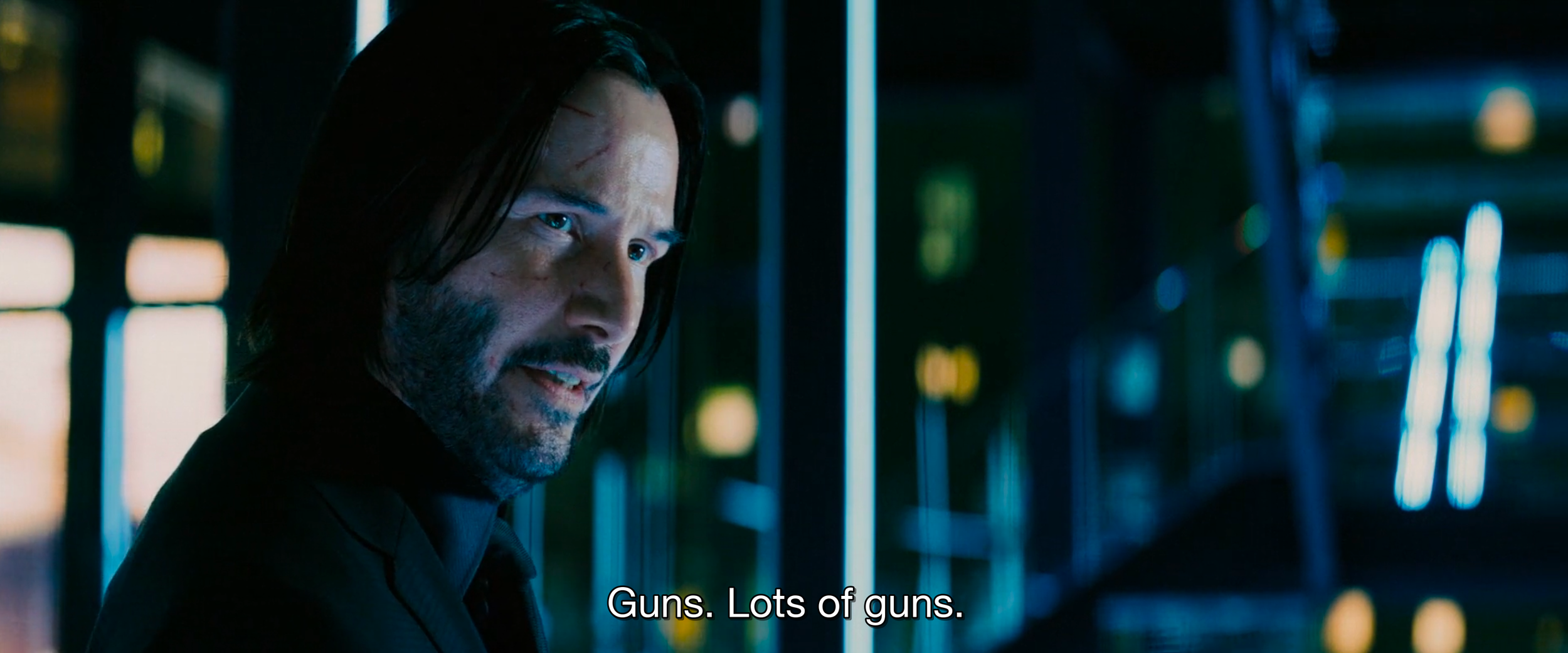
“Let’s see, I’m going to need the ability to tag some mofos, and also to quote tweet their asses”

“Let’s see, I’m going to need the ability to tag some mofos, and also to quote tweet their asses”

What ensues is what film critics love to refer to as an “orgy of violence,” (has there every been an “orgy of peace”?) though in this case, as the carnage is accompanied by Vivaldi’s Four Seasons, perhaps a symphony of violence is more fitting (again, why never a “concerto of violence”?). Charon, hotel staff, and John move about the hotel fighting off an army of High Table forces clad in such heavy armor that they seem impervious to bullets, almost like an army of online bots swarming their target.

The whole time, Winston hides in a secure vault, sipping a martini, emblematic, in many people's minds, of social media execs working from their cushy offices while users rip each other to shreds on their platforms.

Wow, Trump just declared war on Twitter!
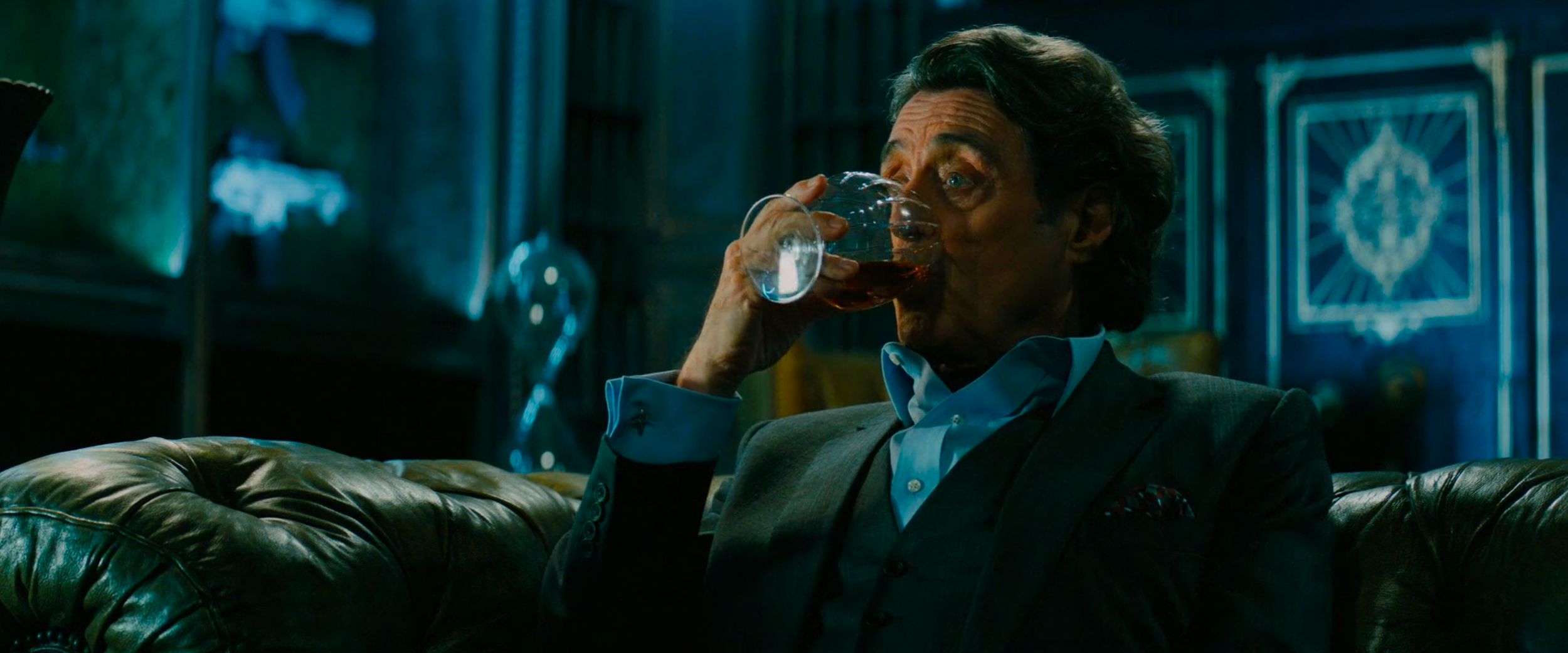
Oh well!

Oh well!

John survives, as usual, dispatching everyone who comes after him. The Adjudicator calls Winston and asks for a parley on the rooftop of the Continental, where John eventually arrives. Winston asks the Adjudicator for forgiveness and offers his ongoing loyalty to the High Table. The Adjudicator agrees to reconsecrate the Continental and restore Winston as manager, but then she turns to John and asks Winston what is to be done of the titular assassin. Winston replies by shooting Wick repeatedly in the chest and knocking him off the roof of the Continental, where he falls several stories to the alley below, bouncing off a few fire escape railings and awnings in the process. Ah, those platforms, they're always liable to turn on you.

Wick is not dead, as you’d expect. The Adjudicator, on the way out of the hotel, peeks in the alley, where Wick’s body is nowhere to be found. He has, we discover, been brought to the Bowery King, now maimed by all those knife wounds ordered by the Adjudicator.

What outlook does John Wick offer us on the state of the online discourse moving forward? Is there any hope for relief? The end of the film isn’t optimistic.

Laurence Fishburne says to Wick, lying there in a bloody heap on the ground: “So, let me ask you John, how do you feel? Because I am really pissed off. You pissed, John? Hmm? Are you?”

John Wick strains to lift his bloodied head off the ground to look Fishburne in the eyes. “Yeah.”
The Uncanny Valley of Interactivity

I believe mass entertainment suffers from a bit of format rigidity due to the natural inertia from structural ossification in the music, film, and publishing businesses, to name the most prominent.

One of the ways this manifests is in the one-way broadcast nature of much of our entertainment despite the fact that several billion people own internet-connected smartphones now, and even though they consume an increasingly large share of that entertainment on such devices equipped with all sorts of input options and sensors.

Whenever I say this, however, people seem to want to leap to choose-your-own-adventure storytelling, and the most cited example is Netflix’s Bandersnatch. In its earnings report for 2018, Netflix famously declared “We compete with (and lose to) Fortnite more than HBO.” I happen to agree with them that the threat of gaming looms larger than any other in the future, and it’s not surprising to me that they’ve spun up a group to experiment with interactive stories like Bandersnatch and Bear Grylls’ You vs. Wild.

However, stories like Bandersnatch fall into an uncanny valley of interactivity. That is, compared to regular movies, they repeatedly force you to do a bit of annoying work that breaks the suspension of disbelief and the flow of the story: the first choice you’re offered in Bandersnatch is to choose which cereal to eat for breakfast. If you’re in the mindset for lean-back entertainment, you can let the story choose an answer for you on its own after some amount of time, but the distracting question prompt is still displayed on the screen.

On the other hand, if you want real interactivity, something like Bandersnatch feels like a busted low-res knockoff of the continuous interactivity of video games, a step function compared to the smooth curves of video game calculus. Why play a game with such crude branching when so many great games, many of them multiplayer and synchronous, offer a truly unpredictable and immersive form of user controllable storytelling?

This doesn’t mean I don’t enjoy branching stories in concept. One of my favorite movie and television genres is what I refer to as the recursive escape room genre.

You’re likely familiar with it from its most famous examples. Groundhog Day (in fact TVTropes refers to this genre as the Groundhog Day Loop). Edge of Tomorrow. Russian Doll. A Christmas Carol.

“Phil, maybe we should just Google a playthrough video on YouTube.”

In these stories, the protagonist keeps reliving the same set of events in what feels like an endless loop in time. As they realize their conundrum, they start to experiment and iterate until they eventually come to an epiphany as to why they’re trapped. Then, and only then, can they break out of the loop.

In a way, these are the film version of a really popular form of YouTube video: the video game playthrough.

Watching these films reminds me of how I’d read Choose Your Own Adventure books as a child. Every time I came to a choice in the story, I’d dog-ear that page, then eventually revisit it to take the other path, until I’d read every possible branch of the story. However, works like Groundhog Day reduce the effort required of the viewer by simply playing all the branches in a linear fashion, offering both a lean-back viewing experience and the sensation of narrative progression as the protagonist moves closer and closer to breaking out of the loop. Bandersnatch offers the ability to jump back to any decision you made previously and change it through a sort of decision history carousel, but that still requires work on the part of the viewer.

I feel like the author of “You Are A Shark” didn’t really have his heart in it

The appeal of recursive escape room movies and TV shows, I theorize, lies in its echo of something many people feel, that they are trapped in some runaway routine in their lives. Wake up, go to work, come home, scrounge up dinner, unwind a bit, then back at it the next day. These recursive escape room stories offer up the possibility that we can puzzle our way out of these Moebius prisons which keep depositing us back to the same starting point. Maybe if I stop eating carbs. Or meditate in the morning instead of checking social media. Or start working out before the morning commute. Maybe if I’m more assertive and ask for a raise, or a promotion, which I richly deserve. With every test, I close off one branch but converge a little more on a solution.

I’d guess that the easiest way to predict how any person’s day will go is to look at the previous day. It’s quite plausible that most lived days on Earth feel like a barely modified replay of the previous day. We all run, for the most part, a standard script of life routines.

The appeal of self-help gurus and podcasts about the habits of successful people is that they resemble those escape room chaperones who offer occasional hints to groups who get stuck on one particular puzzle. These secrets to success from modern gurus feel like video game tips for specific levels, except for real life. Sleep more. Eat keto. Lift weights. Delete social media apps. Walk 10,000 steps a day.

That sense of progressive mastery is a hell of a drug. That’s why, while I’m bearish on choose-your-own-adventure films like Bandersnatch, I’m bullish on the right types of light interactivity when it makes sense. If you were designing a game show today, for example, it would likely look much more like HQTrivia (RIP) than, say, Wheel of Fortune.

Gamification Someone, I can't remember who, recently described golf as the gamification of walking, and I'll never be able to shake that from my mind.has gotten a bit of a bad rap in recent years, and some of the implementations out of Silicon Valley can feel scammy, to be sure. Still, when I look at the progressive mastery tactics of something like Candy Crush, I can’t help but find them more fun and effective, in some ways, than the Suzuki method of teaching violin playing, or Mr. Miyagi’s “wax on, wax off” school of teaching Daniel Larusso karate.

The more I read about the power of habit in human behavior, the more I think of self-help genre as a series of macros one downloads to try to upgrade one's day-to-day regimen. Pair that with the educational power of failure and I've come think of recursive escape room stories as a way to accelerate the improvement of our life productivity.

Narrative debt

HBO’s Watchmen is fantastic, as many have noted. It may be one of the most polished first drafts of fan fiction to ever appear on the silver, errr, OLED screen.

DC may lag behind the Marvel Universe in box office and audience acclaim, but it feels like DC is starting to find its footing with a different approach. Rather than having its directors conform to the ultimate vision of Kevin Feige, as Marvel does, DC seems to be allowing its directors a bit more creative freedom to put their own spin on various characters and franchises. Whether you liked The Joker or not, it was a very Todd Phillips-esque take, and it’s not even meant to be part of the rest of the DC Universe. It’s a stand-alone vision of The Joker.

The trailer for Birds of Prey, for example, feels like an attempt to take Margot Robbie’s Harley Quinn and create a new franchise around that character. The Joker in Suicide Squad, and thus the one that’s implied to be in that branch of the DC Universe, isn’t the same one as in the Phillips’ Joker film. But Birds of Prey director Cathy Yan has stated that they removed the Jared Leto Joker character from their film so they could distance (read: quarantine) themselves from that failed film, creating yet another distinct franchise within the DC universe. Not for nothing is the parenthetical in the title "The Fantabulous Emancipation of One Harley Quinn."After Birds of Prey came out, I saw it. Sad to say I didn't love it, but the critical and fan reception in my network was reasonably positive. Whereas all the Marvel films exist in a single comic universe, DC seems to be sprouting all sorts of independent branches. Perhaps we should think of the DC Universe as the MCU but with social distancing.

Watchmen capitalizes on this creative freedom. Alan Moore, the writer of the original Watchmen graphic novel, isn’t involved. I’m not sure if he would have given his blessing to Lindelof’s revisions to Watchmen loreHahahahaha let's be real he would've never given his blessing., but it wouldn’t have mattered. HBO and Warner Bros. and the DC folks gave Lindelof free rein to fork the Watchmen mythology for this new series.

Lindelof’s public breakthrough was as co-creator of Lost. To this day, it remains one of my favorite examples of what I call narrative debt. That is, when you’re building out a story, you tease plot lines and characters and conflicts that you have to resolve at a later point in the script.

You accumulate narrative debt. The implicit promise to the audience, the debt holders, is that you’ll pay out the disbelief they've suspended on your behalf.

For a whole variety of reasons, Lost was saddled with so much narrative debt that at some point it was effectively insolvent. Pair that with an obsessive fan base poring over every frame for clues like auditors examining the narrative balance sheet and you had a recipe for a write-down of WeWork proportions. The showrunners couldn’t declare narrative bankruptcy as the show’s ratings were still solid, but they tried to prepare the fans for disappointment via public statements. Ultimately, they whipsawed fans through a series of dramatic story pivots until they were forced to crash land the story in the finale in a way that took the story full circle. The viewers at the end were like Jack and the other survivors on that beach in the series premiere, dazed and bloodied, wondering what the hell had happened.

Chekhov’s gun is the most famous instantiation of the principle of conservation of narrative. Some people want the ledger of stories to balance perfectly. Every first act gun must go off in act three. All non-essential plot elements should be dropped. Not surprisingly, Chekhov was a master of the short story, a form which demands concision.

I’m less of a stickler for obsessively manicured stories than some, though I can nitpick plot structure with the worst of those YouTube critics. I tend to do so only if a film or show is marketed as having been assembled with the delicacy of an expensive wristwatch (Watchmen reference!). There is a certain elegance to a plot in which every last element connects, but as the years go by I find that type of clinical precision can leave a show or film feeling a bit stifled and lifeless.In the original Watchmen, Adrian Veidt can be thought of as a director trying to pull off a massive fork of the global narrative. A la Fincher's The Game, he does it in the real world. Of course, his is a Shyamalan-like effort that hinges entirely on a last minute plot twist, and as we've seen from Shyamalan's later works, often the narrative debt load is too heavy to recover from.

Lindelof seems to be at his best riffing off of something less open-ended. The confines of an existing piece of intellectual property seem to provide guardrails within which his creative forks seem to flourish. The Leftovers had Tom Perrotta’s novel to establish the inciting incident, and he and Lindelof expanded that into one of my favorite television shows, a moving meditation on how humans grapple with loss and grief and faith.

Watchmen from HBO has Moore’s classic graphic novel as a narrative precedent, but Lindelof has remixed it as a story about white supremacy and the racial sin at the heart of America’s origin.

I often think of TikTok as a logical modern outgrowth of remix and sampling culture, but the television world conjuring a remix of Watchmen is one of the most pleasant surprises of 2019.

As large media conglomerates focus more and more on franchises, I’d love to see some of the more progressive leaders at those companies contemplate whether a limited open source strategy on their premium intellectual properties might not be the most defensible, modern approach.

Over a decade ago, Marc Andreessen defined a platform as “a system that can be reprogrammed and therefore customized by outside developers -- users -- and in that way, adapted to countless needs and niches that the platform’s original developers could not have possibly contemplated, much less had time to accommodate.”

Even longer ago, in 1986, Alan Moore and Dave Gibbons released a twelve-issue comic book series titled Watchmen. Decades later, an outside writer named Damon Lindelof read a piece titled “The Case for Reparations” by Ta-Nehisi Coates in the Atlantic and learned about the Tulsa, Oklahoma massacre of 1921, remixed it with Moore and Gibbon’s original creation Watchmen, and produced an unexpected new take on the franchise which I don’t think anyone saw coming when the series was first announced.

Watchmen is a platform.

Smoke and Mirrors

“When a judge walks into the room, and everybody stands up, you’re not standing up to that guy, you’re standing up to the robe that he’s wearing and the role that he’s going to play. What makes him worthy of that role is his integrity, as a representative of the principles of that role, and not some group of prejudices of his own. So what you’re standing up to is a mythological character. I imagine some kings and queens are the most stupid, absurd, banal people you could run into, probably interested only in horses and women, you know. But you’re not responding to them as personalities, you’re responding to them in their mythological roles. When someone becomes a judge, or President of the United States, the man is no longer that man, he’s the representative of an eternal office; he has to sacrifice his personal desires and even life possibilities to the role that he now signifies.”

Joseph Campbell and Bill Moyers' The Power of Myth

When I think of Netflix's originals taking the leap to that level of professional craftsmanship that put them in that tier considered "premium video," for however long that term endures, the show that leaps to mind is The Crown, one of my favorite of their homegrown series. House of Cards came earlier, and landing that Fincher production with that cast was a massive coup, but The Crown, with its focus on the English monarchy, carries that air of gentrified prestige that seems apt in a discussion of what qualifies as professional film and television.

The Crown is comfort food for those who prize a level of tightly structured scripts, lavish production design that likely broke out a line item for brocade, precise diction from the school of classical acting that could wouldn’t feel out of place on the stage at the Old Vic, upper lips as stiff as the creases in the tailored English suits on display, long glances freighted with import...in other words, all the trappings of aristocratic melodrama. The portentous theme song by Hans Zimmer is one that, like the theme to Game of Thrones, I won't skip, just so I can wrap it around me like a gravity blanket in anticipation for the theatrics to come. The entire affect of the show dances on that fine line between spectacle and farce; rarely has a program treated a group of people who do so little with such gravitas.

But, and I cannot stress this enough, that is the point.

Why do we treat the Royal Family with such reverence? Because ceremony demands it. Sometimes status is a closed circle, and if you trace it you end up where you started. The very act of walking in that circle, though, closes it. The Royal Family has whatever power the people grant them.

The very existence of The Crown, the white velvet gloves with which the show handles its subject, enacts, in televisual form, the act of veneration upon which the Royal Family depends for its status. The show bends the knee, and so do we.

No episode better reflects the way in which our construction of royalty and celebrity rhyme than season 1, episode 5 of The Crown, titled "Smoke and Mirrors." This episode is about the covenant between the famous and those who grant them that fame. It's figuratively, and sometimes literally, smoke and mirrors which turn a plain English woman into a queen. In an age where the internet has once again reshaped the distribution topology of moving images, and given that the Crown returns for its third season this Sunday, it seemed the right time to do a walkthrough of this, an episodes of TV I’ve seen many times and which never ceases to move me.

Episode SPOILERS ahead, obviously, though this is one of those programs where spoilers don't mean much. The journey of watching this show is the experience. I encourage you to grab your remote, fire up Netflix, and follow along. Honestly, if you haven't watched episodes 1 through 4 of season one, it's still fine, but if you want, binge those and then follow along here. I haven’t done an episode walkthrough on my blog before, and honestly this would be better as a video essay, but good luck with that given all the legal hurdles. As it is, Netflix makes it so difficult to grab screenshots of their content that I could only grab so many before losing patience, but I'll drop in some relevant shots from time to time to help you follow along (Netflix, make it easier to grab and share screenshots of your stuff, your whole competitive advantage is economies of scale, you want to overwhelm the competition with your digital footprint in the cultural conversation).

***

The episode begins with a flashback to May 11, 1937. Young Elizabeth is summoned, by her father, on the cusp of becoming King George VI, played by the always magisterial Jared Harris. He'd like her to play the role of Archbishop as he prepares for his own coronation. As she reads over the script of the coronation oath, her father explains the significance of the words. She stumbles over a word she doesn't recognize.

Her father pronounces it for her. "Inviolably. It means, to make a promise you can never break. A very sacred promise indeed." He is instilling in her a sense of the heavy obligations transferred in this ceremony, ones which form the foundation of the power of the throne.

They're interrupted by Private Secretary Tommy Lascelles telling George it's time to go try on the crown. George asks for a bit more time with Elizabeth. "We haven't even reached the anointing!"

George turns to his daughter.

"You have to anoint me, otherwise I can't be King. Do you understand? When the holy oil touches me, I am transformed. Brought into direct contact with the divine. <cue the track “The Anointing” by Rupert Gregson-Williams> Forever changed. Bound to god. It is the most important part of the entire ceremony."

George refers both to the ceremony by which he becomes King but also the power of film itself. We as the audience anoint movie stars, musicians, and athletes, and by our adulation, they are forever changed. Fame and status are a covenant between gods and their disciples, just as brands exist in the covenant between companies and their customers.

Elizabeth follow her father to the fitting for the crown.

As George lifts the crown over, he notes, "Goodness, it's very heavy indeed."

"Five pounds," says the attendant.

"Not to mention the symbolic weight, hmm?" replies George. Heavy is the head that wears the crown, in every sense.

He looks at himself in the mirror, then turns to look at his daughter, who gazes back.

He returns her gaze.

Match cut to the present day, where 25 year old Elizabeth places the crown on her head (she is played to perfection by Claire Foy, whose massive shoes Olivia Colman will have to fill in season three). The now grown Elizabeth is standing in the exact spot where she once stood and watched her father don the crown, such that her eyeline matches that of her father's in the past.

They cut back to George in the past one last time, giving a wry smile to his daughter across 17 years. Soon she will shared the burden of the titular crown.

"It's not as easy as it looks," says Elizabeth, trying to balance the crown on her head.

"That's exactly what the King said," replies the very same attendant who had been at that shared moment in the past, bridging another generation of royalty.

"I remember," says Elizabeth.

It's the type of meticulously composed shot sequence typical of the series, and this scene always gives me all the feels upon rewatch.

That evening, Elizabeth approaches her husband Philip (played with smarmy charisma by Matt Smith; seriously, this entire cast knocks it out of the park) as they dress in their finest for the ballet. She announces that she'd like him to take over as chairman of her coronation committee.

"I want to make a public declaration of my trust in you," she says to her husband. Everything they do has symbolic value, and she understands the importance of her every act in the eyes of the public.

"There's no need to matronize me," he retorts, using the feminist form of the more common "patronize." An ongoing storyline the first two seasons is Philip's discomfort with standing behind his more powerful wife. Behind every great woman is a jealous man yearning for a return of the patriarchy?

At the ballet, Philip, having mulled it over, gives in. However, he has a request. "Total control or nothing at all. Those are my terms."

"All right. But don't go mad," says Elizabeth.

"What does that mean?" he asks.

"It means just don't go mad. It's a coronation. A service that goes back a thousand years. Some things can't be changed," she says.

The immutability and consistency of tradition and ritual reflects but also reinforces power. As Stewart Brand once wrote of government buildings, there's a reason they are constructed of marble and stone, often in the style of ancient Greek or Roman architecture. The unchanging nature of the building is meant to convey the durability of the institution.

"Yes, yes, all right," says Philip, but his sentiments will soon change.

Now we cut to Paris, where the ingenious construction of this episode begins to reveal itself. Not only is this episode about the very act of television and its ability as a medium to grant power, but the writer embeds a commentary on the coronation within the episode itself. Or commentator, to be precise, and his name is Edward, Duke of Windsor, or David. He was forced to abdicate the throne in 1936 for marrying Wallis Simpson, an American woman twice divorced, and his eviction still stings. Throughout this episode, David Windsor serves as a proxy for how non-royalty view the coronation. Asked by the royal family to not attend the ceremony given what they perceive as his shameful abdication, he will be forced to watch from a viewing party he hosts from his home of exile in Paris.

David and his wife Wallis sit for a magazine profile, posing in a variety of foppish outfits. They may not be tip top royalty anymore, but they're not paupers. Still, as status is relative, and he since he once reached the footstep to the throne, he struggles to find contentment in his current lot in life. The episode traces the very specific nature of his jealousy and resentment, but the general contour of his longing matches that of status-seekers everywhere.

David and Wallis lead the reporter to a private attic room where he keeps mementos of his past glory.

"Goodness. Bagpipes, too," says the reporter, glancing at all the memorabilia filling the room.

"Yes, I play," says David.

"When he gets homesick," adds his wife.

"And all these photographs of you as King," asks the reporter. "There are none with the crown. Why is that?"

"I never made it that far. I never had a coronation." This isn't fear of missing out; he just plain missed out.

Back in England, Elizabeth announces to her staff that she has decided her husband will be chairman of her coronation committee. Her Private Secretary Tommy says that's impossible as it's the job of the Duke of Norfolk, the chief butler of England. "Running the coronation, that's what the Norfolks do," says Tommy. That's why we call it tradition, girlie.

Elizabeth cuts the debate short. "The chairmanship with full autonomy is what he wants. Therefore it is what I want. Norfolk can be vice-chair." You want zee duck? You cannot have zee duck. You can have zee chicken.

David returns to London to visit his ailing mother Mary, and while there Private Secretary Tommy and the Archbishop deliver the bad news: the Duke of Windsor and his wife aren't welcome at the coronation. David goes on an extended diatribe, calling the Archbishop "Auld Lang Swine," and he quips, in a letter to his wife, that his mother, who passes away while he is England, had blood that ran as "icy cold when she was alive as it does now she's dead." No one bitch slaps as poetically as the English.

In the same letter, as we see a shot of David talking to Elizabeth, we hear him refer to the incoming Queen as "Shirley Temple" and his other family members as "desiccated hyenas." This club was dead anyway, says the guy turned away at the door, through his tears.

At Mary's funeral service, Philip notes to Elizabeth that this ceremony is exactly like her father's funeral service. Tradition is so rigid in English corridors of power that nothing changes. He vows her coronation will be different, to reflect her, a young woman, and the "fast-changing, modern world."

At his first coronation committee meeting, Philip presents his thoughts.

"The eyes of the world will be on us. Britain will be on show, and we must put our best foot forward. In such circumstances, the temptation is to roll out the red carpet and follow the precedent set by the grand and successful coronations of the past. But looking to the past for our inspiration would be a mistake in my view."

Philip recognizes that when it comes to the power of his wife’s throne, ritual and reality are in many ways inseparable, and the only way to alter the nature of her power is to adapt the ceremonies that construct it.

He continues. "Make it less ostentatious, more egalitarian, show more respect and sensitivity to the real world. We have a new sovereign, young, and a woman. Let us give her a coronation that is befitting of the wind of change that she represents, modern and forward-looking at a moment in time where exciting technological developments are making things possible we never dreamt of which brings me to my next point..."

And what, pray tell, is that technology? Television. Of course, we are watching him talk about this on a television series streamed through an application called Netflix that is itself an adaptation of television itself, and you’re reading about my discussion of this episode through the internet. Also, later David Windsor will describe the coronation ceremony to an audience viewing the coronation on a television at his house in Paris. This episode is thematic Inception and I am here for it, every bit.

The committee is horrified by Philip’s plan. At Westminster Abbey, where preparations are underway, one committee member examines a television camera with apprehension and disgust and asks Philip, "No close-ups, huh? Zoom lenses?" In the aristocracy’s classical conception of power, physical distance is how status gaps are both constructed and measured. Normal people aren't allowed in to see the coronation because they are meant to feel every bit of the expanse between them and the throne.

Coronation committee members gaze through a TV camera at Westminster Abbey during preparations for the ceremony. Meanwhile we look at them through the gaze of a camera that was pointed at them on set.

But film is its own medium, with its own peculiar powers, and one of those is its ability to alter our spatial reality. When the close-up was invented in film, it unlocked a unique advantage of cinema over theater, the ability to bring us closer to a person than we'd be even in real life. If you were to put your face up against someone so that their face filled your field-of-view as much as a film close-up, you'd be arrested for assaulting their personal space. But in film, we can be simultaneously abstracted from the characters on screen yet halfway up their nostrils.

The craft of acting changed with the advent of the close-up. No longer was it necessary to act in so broad a style ("Why I oughta smack you in the kisser!" overacts the old black and white film cowboy). Now, the most subtle of facial expressions, the tiniest crease of one's brow, could register several feet high on the silver screen.

But more than that, the close-up, in closing distances, offered an alternative to spatially remote constructions of power in favor of a new relationship between star and audience, that of emotional intimacy. The Crown is emblematic of this quality of the film and television medium, spending its long story arc humanizing the Queen of England, transforming her from a remote caricature into a three-dimensional human with a rich and legible inner life. Prior to seeing The Crown, my regard for the Royal Family was, at best, dismissive. They still are. However, my feelings towards the fictional character Elizabeth from The Crown, the one played by Claire Foy, is one of deep sympathy. It's not that film can't do shock and awe but that other mediums struggle to match the moving picture for emotional intimacy.

In a way, the hidebound coronation committee is right to be concerned over Philip’s plan. Television as a medium did reconfigure the modern world, and it continues to hold the power to topple established power structures. Winston Churchill (John Lithgow) brings the concerns of the committee to Elizabeth.

"What is the purpose of the Crown? What is the purpose of the monarchy? Does the crown bend to the will of the people to be audited and accountable? Or should it remain above temporal matters?"

When the dominant medium of an age shifts, the nature of power shifts with it. Churchill is asking Elizabeth, but also asking himself, whether the advent of television means the two of them must change the means by which they relate to the people they govern.

Ultimately, he leaves the decision in her hands. She visits Philip at the Abbey where they debate his proposed changes.

She confronts him, "Trade unionists and businessmen? In the Abbey?"

"If you want to stay on the throne, yes," he replies.

"In a trimmed-down televised coronation?"

"If you want to avoid a revolution, yes. You forget, I have seen first-hand what it is like for a royal family to be overthrown because they were out of step with the people. I left Greece in an orange crate. My father would have been killed. My grandfather was. I'm just trying to protect you."

"From whom? The British people? You have no idea who they are or what they want." She continues, "If the people are hungry, they want something that lifts them up."

"And how do you propose lifting them if they cannot see it?" he fires back.

"The people look to the monarchy for something bigger than themselves. An inspiration. A higher ideal. If you put it in their homes, allow them to watch it with their dinner on their laps..."

"It will democratize it, make them feel hat they share in it. Understand it." Rewatching this episode today, I can’t help but think of AOC live streaming on Instagram Stories from Washington DC, explaining arcane Congressional procedures in the newest of mediums.

Elizabeth sees the determination in Philip's face, and she caves. She agrees to televising the coronation.

But then she turns the tables on him. He's not the only one who understands the significance of the coronation ceremony and she has a change in mind as well. She has heard of one of his proposed changes to the ceremony that she is not budging on.

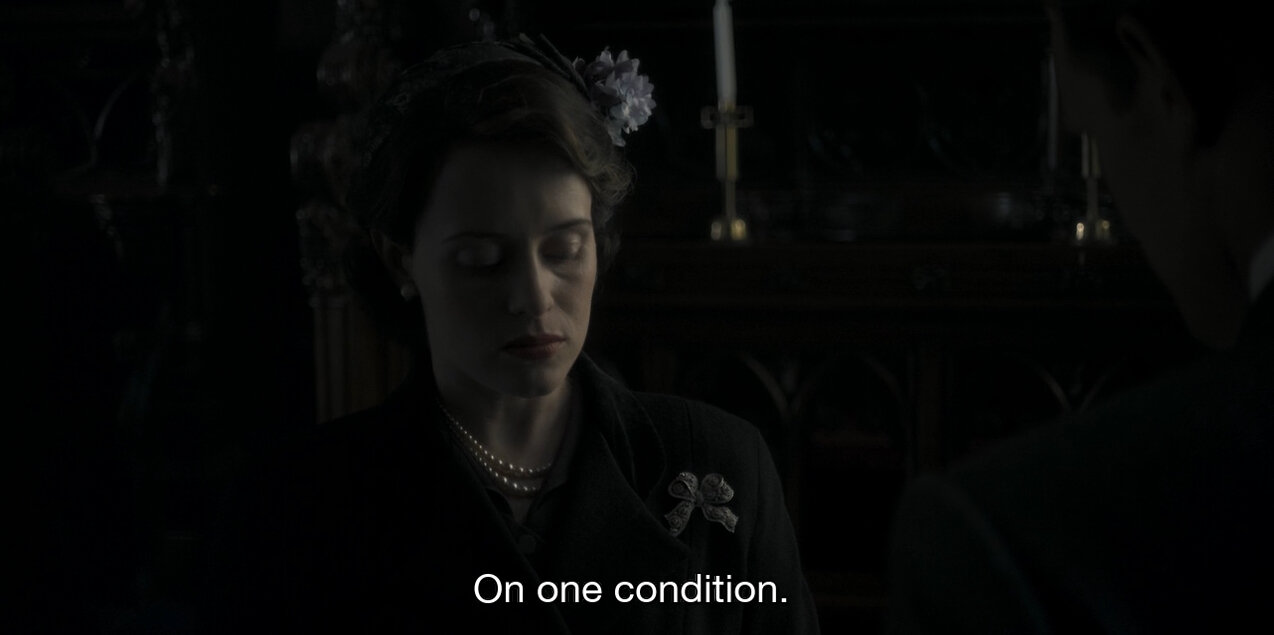
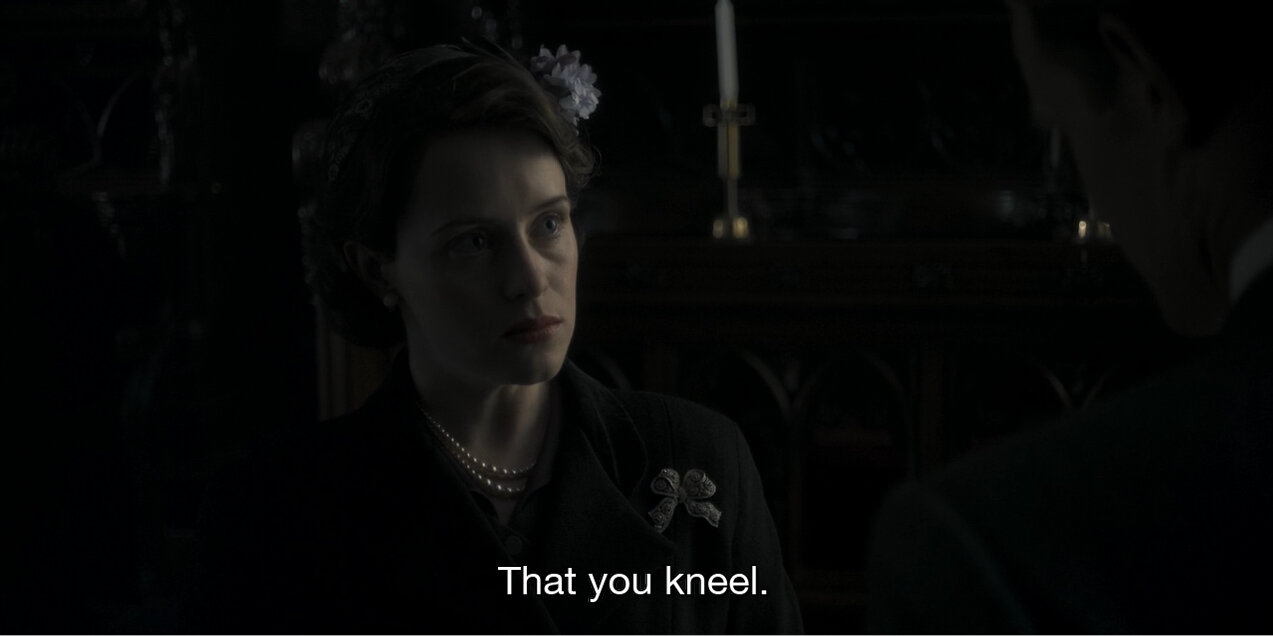
"But on one condition," she explains. "That you kneel." Eat your heart out Danaerys, you weren't the first TV queen to ask her man to bend the knee.

Now it's Philip's turn to protest.

"I merely asked the question whether in this day and age it was right that the Queen's consort, her husband, should kneel to her rather than stand beside her," he explains.

"You won't be kneeling to me," she replies.

"It will feel like a eunuch, an amoeba, is kneeling before his wife."

"You'll be kneeling before God and the Crown as we all do."

"I don't see you kneeling before anyone," snaps Philip.

"I'm not kneeling because I'm already flattened under the weight of this thing."

The duel of words continues. Philip accuses her of becoming entitled and power-hungry. She says he's acting weak and insecure.

"I want to be married to my wife," he says, trying another tack.

"I am both and a strong man would be able to kneel to both." Oh snap.

"I will not kneel before my wife."

"Your wife is not asking you to."

"But my Queen commands me?"

"Yes."

Oh you gonna bend that knee Philip. Nothing but respect for my Queen.

On the day of the coronation, David Windsor is back at home in Paris, providing a running commentary on the ceremony to the audience gathered in front of the television at his viewing party in Paris. He mocks the uncomfortable Gold Coach carrying the Queen to Westminster Abbey, but we see him seated in the front row of his gathering, leaning in to catch every detail of the ceremony he yearns to attend.

David Windsor and his wife Wallis Simpson seated front and center at their coronation viewing party at their home in Paris.

At Westminster Abbey, the television producer constructs the telecast, choosing from a series of camera angles projected on a bank of televisions in the production area. This is the new choreography of power, the assembly of moving images. We see the procession on small black and white television screens, first in the home of David Windsor, then in video village where the television producer is calling out shot. The ceremony seems inconsequential, almost squalid, seen on such poor monitors, but the power of the medium lies in the millions of people watching it for the first time in homes around England and across the globe.

David Windsor’s television set. Probably lavish for its time, but I’m guessing some of his guests complained about not being able to see anything like we all complained about that super dark battle scene in Game of Thrones that final season.

The new masters of the grand narrative, deciding what series of moving images would define the coronation for millions of viewers

David Windsor fields questions at his party, describing each stage of a coronation ceremony he knows by heart.

The golden canopy being carried over Elizabeth so prying eyes won’t see the anointing.

Then, just as Elizabeth prepares to be anointed, the television broadcast cuts away to a static shot.

Viewers at home weren’t allowed to view the anointing, instead hearing just the audio running over this static shot.

"Where'd she go?" asks a guest at the party.

"And now we come to the anointing," explains David. "The single most holy, most solemn, most sacred moment of the entire service."

"So how come we don't get to see it?" asks that same guest.

"Because we are mortals," replies David.

“So let's set the world on fire…we can burn brighter…than the suuuuuuuun”

But at that moment, the TV show The Crown cuts to a shot from the interior of Westminster Abbey, the camera dollies in towards Elizabeth under the golden canopy held over her head. We, the viewers of The Crown, do get to see the anointing. A TV camera will take us there. Because we are modern TV viewers, and we are not mortals, we are now gods. The actual broadcast, in 1953 (still available on YouTube), preserved the sacred nature of the anointing, shielding it from mortal eyes. The Crown, a television show in the 21st century, has a different goal.

The Archbishop begins the oath. "Will you maintain and preserve..." He pauses, tripping on on his memory. He did not stumble during the actual coronation, but showrunner Peter Morgan adds this moment in order to tie the episode back to the opening of the episode when a young Elizabeth rehearsed the ceremony with her father. It's a bit of dramatic license that pays for itself with the emotional round-trip.

Elizabeth realizes the Archbishop's predicament and steps in to complete the Oath for him. "Inviolably?" she says. Her father taught her the meaning of the word when they rehearsed the oath some 17 years prior, and in reciting it once again, she has now finally internalized the weight of the office, as her father did before her. She bonds across time with her deceased father, one more time.

"I will," she proceeds, completing the oath.

Next we see product-commercial-grade closeups of the holy oil, backlit as if it were the nectar of the gods, and effectively it is. Water into wine, wine into blood.

The Archbishop anoints her hands, her breast, and finally her head with the oil.

Morgan leaves the next part of the oath unchanged, and why not? The words are majestic even today.

"As Kings, priests, and prophets were anointed, and as Solomon was anointed King by Zadok the priest and Nathan the prophet, so be thou anointed, blessed, and consecrated Queen over the peoples whom the Lord they God hath given thee to rule and govern, in the name of the Father, and of the Son, and of the Holy Ghost. Amen."

But also, we, as viewers, in this moment, and all the episodes before and after, anoint Claire Foy, actress, with our full adoration. She is our Queen Elizabeth in this television series. It's the same covenant we make with Robert Downey Jr. when we anoint him our Iron Man, or Chris Evans our Captain America, or Mark Hamill our Luke Skywalker. The Archbishop anoints Elizabeth Queen with oil and oaths and incantations, while the entire cast and crew of The Crown transform Claire Foy into the fictional Queen Elizabeth through the act of filmmaking, transmitted to us through the medium of television, so that we the audience may crown her.

In Paris, David Windsor soaks in the moment. He is our guide to the alchemic power of the coronation, but also to that of television. He stands in for the people of England, and television audiences everywhere.

"Oils and oaths. Orbs and scepters. Symbol upon symbol. An unfathomable web of arcane mystery and liturgy. Blurring so many lines no clergyman or historian or lawyer could ever untangle any of it." He stops just short of tossing in the title of the episode, "smoke and mirrors."

"It's crazy," says that same talkative house guest. "Smoke and mirrors" are commonly used as a term of derision. As viewers of this episode, we're watching a bunch of actors in makeup play-acting. Crazy indeed.

But Windsor understands the mythic power of the ritual, and we, in our emotional absorption in this moment, feel the power of the medium of television. Whereas earlier Windsor mocked his family, dismissed the Queen, and punctured the pomp with sarcastic quips, now he can't help but be spellbound by the symbolic force of it all. In a beautiful shot, we see his face, full of yearning, reflected in his TV screen, his niece, now his Queen, on screen.

Almost King, now gazing at his niece, now his Queen, through a TV screen.

David corrects his guest. "On the contrary. it's perfectly sane. Who wants transparency when you can have magic. Who wants prose when you can have poetry? Pull away the veil and what are you left with? An ordinary young woman of modest ability and little imagination. But wrap her up like this anoint her with oil, and hey, presto, what do you have? "

He pauses.

"A goddess."

I sometimes watch videos of YouTube vloggers greeting throngs of young fans at conferences around the world. Like that guest at David Windsor's viewing party, many see this and dismiss it as crazy. To do so is to misunderstand the nature of adulation and how a new generation of celebrity use new mediums like YouTube to their full effect, to create their own covenants with their own band of pilgrims.

Back at Westminster Abbey, one step remains. Philip, time to bend the knee bitch! With great reluctance, he shuffles to the throne, removes his crown, and drops to one knee before his wife, and his Queen.

Bend the knee old chap

The expressions Matt Smith and Claire Foy trade tell us all we need to follow the inner struggle in their hearts, and again, we register all these micro-expressions through the magic of the close-up, the liturgy of film. Shot, reverse shot, shot, reverse shot. A wordless conversation of images.

The episode concludes back in Paris, with David Windsor. As the sun sets, he pulls out his bagpipes and plays in his yard. As his wife noted earlier in the episode, he plays when he's homesick (there is barely a single line in this episode that doesn't come back to pay off like Chekhov's gun, the script is that tightly wound). The camera pulls back and up into the sky behind him, framing a beautiful lens flare the color of holy oil, as if Elizabeth's royal presence is shining down on him from above England itself.

We end on a shot from the other direction, a medium shot of Windsor from head-on. HIs eyes are filled with tears.

Oh, to be King, if only for a day

Status Update, and How Everyone IPO'd in the 21st Century

Sorry for the long hiatus. I've been doing some formal advisory work and a bit of angel investing these past months, and so more of my writing has been private.

More than that, though, the Internet, with all the status games and incentives I wrote about in my last post, began to feel like an obligation that started whispering in my ear from a permanent porch on my shoulder. I needed a break from reading all the takes, most of all from the ones I felt myself forming in response to every next event, of which there is no end. The internet can cajole you into feeling as if you only exist through the act of posting.

Jia Tolentino writes in her great essay collection Trick Mirror:

As more people began to register their existence digitally, a pastime turned into an imperative: you had to register yourself digitally to exist.

...

The dream of a better, truer self on the internet was slipping away. Where we had once been free to be ourselves online, we were now chained to ourselves online, and this made us self-conscious.

...

As a medium, the internet is defined by a built-in performance incentive. In real life, you can walk around living life and be visible to other people. But you can’t just walk around and be visible on the internet—for anyone to see you, you have to act. You have to communicate in order to maintain an internet presence.

...

To try to write online, more specifically, is to operate on a set of assumptions that are already dubious when limited to writers and even more questionable when turned into a categorical imperative for everyone on the internet: the assumption that speech has an impact, that it’s something like action; the assumption that it’s fine or helpful or even ideal to be constantly writing down what you think.

I tweet, therefore I am? Internet participation can feel like being on tour in perpetuity, and the feedback loops can feel like a noose, one that you tighten yourself.

At what level of compression of thought on Twitter does any bit of specific wisdom get squeezed out of a thought?

Sometimes I wonder if the natural asymptote of an increasingly popular Twitter account is a parody of that same account. Could we train a GAN on some of the more prolific and consistent Twitter accounts to create Westworld-like clones, indistinguishable from the original? Could we create a parallel Twitter where these simulations of iconic accounts would live on in perpetuity, dispensing compressed nuggets of advice that straddle the line between profundity and banality, interacting with each other, believing that they and all of their peers were humans? Maybe we are all destined to become bots.

A long hiatus is a good test of what you truly miss, however, and I do miss the masochistic act of hammering a piece into some usable shape, and I miss the give-and-take with my readers. Thoughtful discourse hasn’t left the internet, it just isn’t happening in the public squares, for a variety of reasons I’ll dive into this month.

After my last post on Status as a Service, I received a lot of thought-provoking email, and in the ensuing months I’ve chatted for many hours with all sorts of people from operators to investors. I plan to spend some of my next few posts to respond to the most common points and questions my readers raised. A lot of these ideas have been renting a sofa in my head these past few months, and I need to Marie Kondo my brain cache.

Before doing that, a few updates.

I appeared on Peter Kafka's Recode Media podcast earlier this year to discuss Status as a Service. Peter has long been one of the journalists I follow on media/tech news, and podcasting has allowed him to be even more prolific and discursive on the topic; we all benefit. And while I love that podcasters can just show up with minimal equipment and start recording, it's always fun to go into the Vox studios, into a noise-proof room, don headphones, and speak into a high-end microphone. Rarely do I feel as, dare I say it, high status. Check out our conversation for a sense of how I've been updating my views on status as it relates to the tech sector.

My second update is that this is the first of my posts to be sent via Substack instead of Mailchimp. I grew out of the free tier of Mailchimp a while ago and the monthly bills were adding up even though I hadn't sent anything in months. I switched over to Substack even before they announced that A16Z would lead their latest round of funding, but I'd like to think the sequencing was causal (just kidding, it was not, and congrats to the Substack team who were friendly and helpful in getting me switched over smoothly).

Substack will allow me to selectively choose when to email my blog posts out, allowing my mailing list and blog to be separate entities. I'll still distribute or link to most of my posts via my mailing list, but on occasion, I may post something that's more blog-related housekeeping that won't be of interest to my email list, and, conversely, something may feel best suited for my mailing list but not my blog. I hesitate to consider myself in the newsletter business—I know, I know, another newsletter to clog your inbox, on top of the countless podcasts you already can’t keep up with—but if you're interested in reading all of my work, sign up for my Substack. If you're already on my mailing list, the backend has changed from Mailchimp to Substack, but otherwise you shouldn't notice any difference.

***

I titled this column Status Update because it was another of the titles I considered for my previous post. I always found it apt that Facebook referred to its posts as "statuses." That so many people use their posts to try to "update" their status—usually to try and raise it—made the term "status update" just too wonderfully loaded.

If you think of social networks as programmable interfaces, then each post on the network updates the contributor's status in a way that makes the nature of status on that network self-describing. You can even think of the impossibly long feeds and databases of all these social networks as one massive blockchain that all users are furiously writing to, trying to establish consensus around their relative status in the community.

My two principles of status were inspired, in part, by the two axioms of cosmic sociology from the science-fiction novel The Dark Forest, the second in Liu Cixin's epic Three-Body Trilogy. Those two axioms:

First: Survival is the primary need of civilization.

Second: Civilization continuously grows and expands, but the total matter in the universe remains constant.

I've always appreciated how the entire trilogy of novels derives, in part, from just those two axioms, though it takes some time for the reader to understand just how. In part, Status as a Service (StaaS) was an attempt to see how far I could extrapolate from just two axioms.

On to reader feedback. One point I heard from quite a few people was, “I don't use [insert social network of choice] for status.”

Of course, not everyone uses every social network purely for status, and as I noted in my piece, there are two other axes on which a social media services can construct a healthy business, utility and entertainment (I'll cover those axes in future posts as there are specific reasons I settled on those three in particular). Just as I would never claim that everything people do is in pursuit of status, no social network operates entirely on that dimension. And, of course, not everyone needs status from a network. Beyoncé doesn't need social media to earn status, she merely uses social media to harvest her already prodigious social capital. Your mileage, as compared to Beyoncé, may vary.

On the other hand, when I hear people claim they aren’t status-seeking, my initial thought is, “Okay boomer.” Well, perhaps that’s not quite right, but something along those lines. What it reveals is just how negative a valence the word "status" and the adjective "status-seeking" have today. Perhaps because we've long thought of status as a relative standing, and status competition as a zero-sum game, we find "status-seeking" personally threatening and distasteful all at once.

However, when I talk about seeking a sense of self-worth, a feeling of belonging and achievement, people have only positive reactions. Are those behaviors so easily titrated apart? I'm skeptical. But to all of you offended by being called "status-seeking," I apologize and applaud your lack of ego. I'm not saying that because I mean to raise your status, but...ah never mind.

The most common question I heard in response to Status as a Service was what spurred the piece. While it’s often difficult with fiction to pinpoint the origin of things, with an essay it’s easier to retrace the journey, or at least to point at specific ingredients.

One of the itches that spurred the piece was that my previous essay Invisible Asymptotes had me puzzling over why various social networks had collided with the shoulder of the S-curve after some prolonged period of hockey stick growth. Metcalfe's Law and the basic network effects theories that dominate discussion of networks would predict otherwise. While I offered some light exploration of the asymptotes for various social networks in that piece, it felt as if a giant variable was missing in the equation. The concept that best solved the equation in my mental backtests was status.

I also focused on status because, since it was my missing variable, it felt like the least understood aspect of social networks. I suppose that is tautological in structure, but it’s also endemic to mining for a new explanation for some phenomenon. There's always a risk in conjuring a single variable to make any equation work, but for argument's sake, I held the other variables constant and used status to the fullest extent possible, in search of its limitations.

What seems clear and almost obvious in hindsight is that not all nodes on a social network are equal and that different configurations of those nodes also matter. The quantity of nodes and connections isn’t sufficient to measure the value of a network alone. Two networks of similar size in nodes and connections may differ widely in stability and potential and kinetic energy. Status differences can be thought of as differences in the size of nodes and the configuration of them.

One of the critical forms of pattern recognition for anyone studying, investing in, or running these networks is learning which arrangements of what types of nodes are stable and which are inherently brittle or even volatile. That requires understanding a network’s status dynamics.

Much of my work advising companies recently has been helping them to understand which type of network configuration makes the most sense for the business they are in. While the past can be full of patterns that are about to implode, there's much to glean from studying previous network collapses because status dynamics remain, like much of human nature, fairly consistent across time. Digital anthropology is underrated.

For example, long ago, night clubs and dating apps understood that a successful marketplace equilibrium almost always begins with women as the supply side, not men. That's why if you're a guy you have wait in line for a long time just for the privilege of paying a cover charge at many clubs; meanwhile, groups of women are ushered in for free. How do you bypass the line as a group of men? By paying for bottle service, contributing to a very particular stable social equilibrium inside the club (not to mention a profitable one; witness the surge in % of floor space devoted to bottle service booths in Las Vegas clubs this past decade).

Any multi-sided marketplace veteran or observer now understands much more about how to sequence their efforts, and whether to focus on the supply or demand side first and why. Bill Gurley appeared on Patrick O'Shaughnessy's Invest Like the Best podcast and spoke to the differences between monogamous marketplaces, where two parties match exclusively for a long-term relationship (for example, finding a nanny for your children) and marketplaces where people just match up for a single transaction (Uber, for example). Li Jin and D'Arcy Coolican of A16Z have written several pieces about network effects that continue to fill in the nuance between the platitudes.

Despite all that, the industry still has a ways to go in incorporating status into its operations. One of the clearest ways this manifests is in the metrics most social networks monitor and report on. Almost all of them aggregate a lot of individual user behavior into aggregate stats. However, just as it's very dangerous to munge cohorts into one lump, failing to understand subgroup status dynamics and configurations among a giant social network disguises a lot of what's actually going on. The trends of the group can diverge from the actual dynamics of various subgroups. Your stats could be growing, they could be declining, and yet you have no idea why. Some competitor comes along and starts stealing market share, and yet on the surface they look like a smaller, subpar version of your network.

The topic of how social companies should analyze their networks is a topic worth a book in itself, and it's clear that we're very early in that journey. Many social networks continue to have no idea when they are about to hit a wall, with less visibility into the future than a club owner who comes in night after night and notices, gazing across the dance floor, realizes one night that the joint has lost its heat. When people refer to Facebook as a boomer ghetto, they're referring first to a decline in social capital, which precedes the loss of human capital

More on this soon, but for the remainder of this update, I want to look back at the 21st century to date and marvel at one of the greatest changes in civilization, one wrought by first the internet and second by the rise of massive social networks.

***

One way to understand the impact of these public social networks on humanity is to think of this as the era in which humans took their personal thoughts and lives public at scale. Billions of humans IPO'd, whether we were ready for it or not, explaining why the concept of a personal "brand" became such a pervasive metaphor.

In another era, most of us lived in social circles of limited scope. Family, school, coworkers, neighbors. We were, for the most part, private entities. Social media companies quickly hit on the ideal configuration for rapid network growth: take the interaction between any two people and make it public. Conversation and information-sharing became a democratic form of performance art.

One reason social networks quickly converged on this as the optimal strategy and configuration is that the majority of people on any social network merely lurk. By making the conversations of the more extroverted, productive nodes public, you sustain the interest of that silent majority of observers with what is effectively crowd-sourced (read: free) content. The concept of 1/9/90 is that a stable equilibrium can be achieved in a large network if the shouting class, the minority which entertains the much larger but silent majority, is given enough quantifiable doses of affirmation (likes) to keep the content spigot flowing. As these large public social networks grew, even many who were previously modest began taking the stage on social media to karaoke to the crowd. Live fast, die young, and leave a viral post.

Just as there are many advantages to being a public company, becoming a public figure carries all sorts of upside. Once your ideas and your self are traded publicly, anyone can invest and drive the value of those goods higher. If you’ve ever written a viral blog post or tweetstorm and gained thousands of followers, if you’ve had a YouTube video picked up by traditional media and found yourselves interviewed on the local news, you’ve felt that rush of being a soaring stock. Social networks not only provide public liquidity for anything you care to share on them, but they also continued to tweak their algorithms to accelerate the virality quotient of their feeds. In a previous generation, Warhol quipped the duration of sudden fame was 15 minutes, but social media has made that the time it takes to become famous.

The problem is that, like many private companies who find the scrutiny of public markets overly stringent, many of us were ill-equipped for "going public" with what were once private conversations and thought. It's not just those who made enormous public gaffes and got "canceled." Most people by now have experienced the random attack from a troll, the distributed judgment of the public at large, and have realized the cost of living our lives in public. Most celebrities learn this lesson very early on, most companies put their public-facing executives through PR training, but most humans never grew up under the watchful gaze of hundreds of millions of eyes of Sauron.

That dread we feel when our thoughts and selves are traded as public goods is the unease that comes from rendering the personal transactional. Public companies are restricted in what they can say publicly. The same is true for people who take their selves public. The markets punish companies that stumble, and the judgment of the masses is no less harsh for individuals who do their thinking out loud on social media. This new form of public backlash has even earned its own moniker: cancel culture.

One of the most famous and iconic incidents of cancel culture was the tweet that "blew up Justine Sacco's Life." As soon as I mention it, almost any student of Internet culture knows the tweet.

Before boarding the last leg of a flight from New York to Cape Town, Sacco wrote to her 170 Twitter followers at the time:

"Going to Africa. Hope I don’t get AIDS. Just kidding. I’m white!"

By the time her flight landed, she had what might be the closest experience to traveling to an alternate universe on a plane since the passengers of Oceanic Flight 815 on the TV series Lost. When Sacco's flight landed and she emerged from the runway into the airport, her phone reaching out to handshake with the network, she stepped into a timeline in which she was an international villain.

Justine Sacco must have felt like Jack on that beach in the pilot of Lost, wondering where she’d landed and what the hell had happened. In fact, in hindsight, perhaps Lost is more compelling as the story of a bunch of people who’d been canceled, all…

Justine Sacco must have felt like Jack on that beach in the pilot of Lost, wondering where she’d landed and what the hell had happened. In fact, in hindsight, perhaps Lost is more compelling as the story of a bunch of people who’d been canceled, all stranded in some social media purgatory to try to atone for their sins.

Nowadays, it's a common occurrence to see someone inadvertently place a tracer on themselves online and summon the collective brimstone and fury of a global mob on themselves. But, if you're old enough to remember the pre-internet, pre-social-media era, try to fathom how a single relatively unknown citizen of the world like Sacco could write or utter any sentence of just sixty-four characters and ignite anything remotely comparable to the fury of millions of total strangers from across the globe.

I'd argue that such a feat was impossible in a previous era. The only way someone like Sacco could even reach that many people back then would have been to broadcast such a message through a mainstream media channel like a newspaper or television network, all of which were under the control of a select group of gatekeepers who would've never broadcast her joke in the first place (remember, I'm talking about even the pre-Fox News era).

We've had no shortage of dystopic futures that warned of mass surveillance, but not many of them described a future in which you could destroy your own life with your own words. The Twitter "What's happening" prompt box is like a command line with the power to, among other things, obliterate your life. Such is the power of a megaphone that can reach most of the civilized world. Who's up for global open mic night? What could go wrong? Wheeeeeeeeee!

After I read the Three-Body Trilogy, the first metaphor that leapt off the page was the idea of Twitter as The Dark Forest. Many public figures had already gone radio silent online, the downside was so severe. Yancey Strickler recently wrote about this idea of the internet as Dark Forest, and if you're not worried about having that metaphor spoiled, click over and give it a read.

Just as the SEC regulates what public companies say, social norms regulate what a person can say on social media. PR training today begins for all of us once we get our hands on our first smartphone. It's little surprise that just as many companies now stay private for longer, many people have retreated to private messaging groups, taking their thoughts back into the shadows, while those who stay public learn to code messages in memes or language so opaque and Straussian that even political dissidents would be impressed.

If your feeling on all this is, good, these people got what they deserved, I understand. Some people who’ve been canceled have written some truly abhorrent things, some of it even illegal, and sometimes it can feel like we live in an age of hyperefficient social Darwinism, a hyperactive white blood cell army patrolling the alleyways of the internet in that distributed swarm style the internet made its own.

But the exact definition of “cancel culture” matters. The closer the social mob is to enforcing the values you believe in, the more just it feels. The more divergent the values of the mob, the more you feel attacked by an army of trolls. I’m not opposed to new forms of social capital regulation enabled by the internet, but social mob behavior can be a mass of unthinking, blind, rage. Like a real-life mob, just bigger, and faster moving. That’s a frightening phenomenon.

As we approach the year 2020, and we look back on two decades where billions of people went public, I’m equal parts astonished and horrified. I imagine a time traveler appearing to a citizen of the pre-internet era in a new age Monkey’s Paw fable, and asking that person, “I can grant you one wish, what do you desire?”

And that person would look at the world around them, all the people going about their business, strolling past and paying them no heed, and they’d say, “Make me famous.”